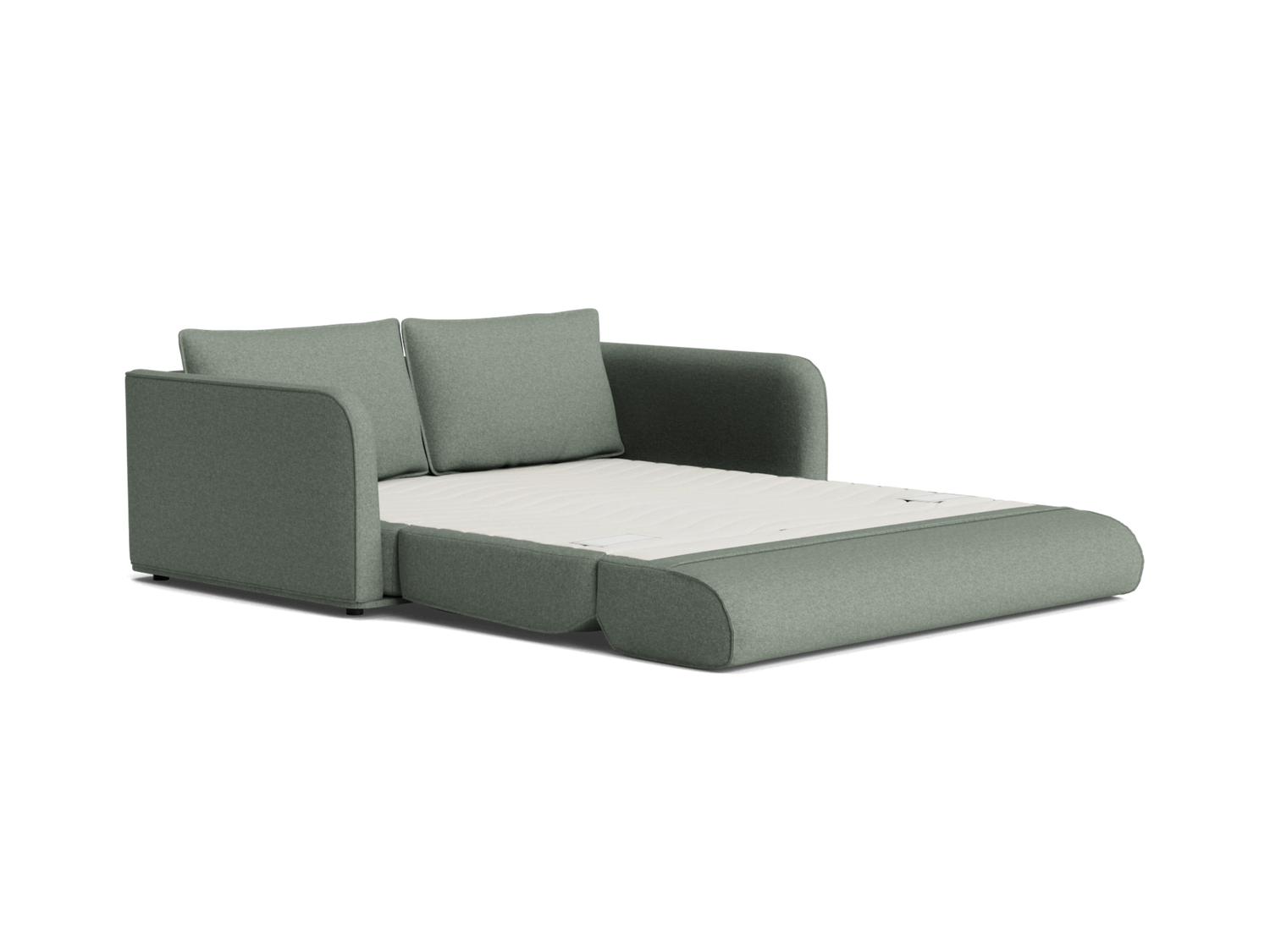
Sectional Sofa Beds: How to Choose the Best of Both Worlds
Share
If you've ever wished your living room could pull double duty as a guest room, a sectional sofa bed is the answer. It gives you generous, everyday seating and a ready-made sleeping setup — all without surrendering a spare room to a mattress that sits empty most of the year.
A sectional sofa bed combines the layout of a multi-piece sectional with a built-in pull-out bed. The right one seats four to six people comfortably during the day and converts into a Full or Queen sleeping surface at night — without sacrificing your living room.
What Is a Sectional Sofa Bed?
A sectional sofa bed — also called a sleeper sectional or sectional sleeper sofa — is a multi-piece sofa that converts into a sleeping surface. Unlike a standard sofa bed, it includes multiple connected sections: a main sofa body, a chaise lounge or corner piece, and a sleeping mechanism built into one of those sections.
During the day, it's your main couch. At night, pull out the mattress and your living room becomes a guest room. It's one of the most space-efficient furniture investments you can make for a home that doesn't have a dedicated guest room.
Sectional Sofa Bed vs. Regular Sofa Bed
A sectional sofa bed is larger, more configurable, and better suited to homes that entertain regularly. A regular sofa bed is a single straight unit — usually a two- or three-seater — with a fold-out mattress built into the base.
|
Feature |
Regular Sofa Bed |
Sectional Sofa Bed |
|
Seating capacity |
2–3 people |
4–6+ people |
|
Footprint |
Compact |
Larger |
|
Sleeping surface |
Twin to Queen |
Full to Queen |
|
Storage options |
Rare |
Common (under chaise) |
|
Configuration options |
Limited |
Reversible chaise, modular |
|
Typical price (USD) |
$300–$1,500 |
$800–$5,000+ |
If your space is tight, a regular sofa bed is the more practical call. If the sofa is your primary seating and guests stay over regularly, a sectional sofa bed earns its footprint many times over.
Types of Sectional Sofa Beds
There are four main configurations of sectional sofa beds — and the right one depends on your room layout, how many people you need to seat, and how often the pull-out bed will actually get used.
L-Shaped Sectional Sofa Bed
The L-shaped sectional is a sofa with a perpendicular chaise lounge on one end, typically running 90"–110" wide. The pull-out bed lives in the main sofa section. It's the most widely available layout and works in most average-sized living rooms. A solid default if you're starting your search without a strong preference.
U-Shaped Sectional Sofa Bed
The U-shaped sectional wraps around a coffee table on three sides and seats 6+ people. It's the right choice for large, open-plan spaces — but measure carefully. A U-shape is one of the biggest footprints you can put in a room, and it commits to a layout in a way the other types don't.
Sofa + Storage Chaise
Here the chaise section lifts to reveal a storage compartment beneath — the ideal place to keep spare bedding and pillows out of sight during the day. The pull-out bed sits in the sofa portion. This is one of the most practical everyday configurations, especially if you use the sofa bed more than a few times a year.
Corner / Modular Sectional Sofa Bed
Modular sofas are built from individual pieces that rearrange as your space or needs change. Some modular configurations incorporate a convertible sleeping component without the traditional metal-frame pull-out mechanism — which tends to be more comfortable for regular use. Koala's Torquay is one example — a contemporary modular sectional you can reconfigure as your space changes. The Bangalow takes a more relaxed approach, with a deeper seat profile that suits everyday lounging as much as overnight guests.
Not sure whether modular or traditional sectional is the right call? Read: The Real Difference Between Modular and Sectional Sofas
How to Measure Your Space
Measure your room before you look at a single product page. Getting dimensions wrong is the most expensive mistake you can make with a sectional sofa bed.
Step 1 — Measure the room. Note the full width and depth of the space. Leave 30 to 36 inches of walking clearance on all sides of the sofa to ensure comfortable room flow.
Step 2 — Measure pull-out depth. When fully extended, most Queen sleepers add 83" to 88" of total depth from the back of the sofa frame to the foot of the bed. You need enough floor space for the bed to open fully and for someone to get in and out without climbing over furniture.
Step 3 — Measure the doorway. Sectionals ship in separate sections, but individual pieces can still be wide. Check every doorway, hallway, and stairwell before ordering.
Quick size reference:
-
Small (under 89" wide) — apartments and compact living rooms
-
Standard (90"–109" wide) — most average living rooms
-
Large (110"+ wide) — open-plan or generously sized spaces
Mattress Types: What You'll Actually Sleep On
The mattress is where budget sectional sofa beds cut corners — and where you feel the difference immediately. There are three main types worth knowing.
Foam Mattress
Foam is the most common option in mid-range sleeper sectionals. Quality varies significantly between brands. Look for CertiPUR-US® certified foam, which is independently tested to ensure it is made without ozone depleters, formaldehyde, or heavy metals, and has low VOC emissions for indoor air quality. For thickness, a 4-to-5-inch profile is generally considered the comfort floor for occasional guest use—it’s thick enough to keep sleepers from feeling the support frame beneath them, but slim enough to allow the mechanism to fold shut cleanly.
Memory Foam Mattress
Memory foam conforms to your body shape, distributes weight more evenly, and does a better job reducing pressure points than standard foam. It's the right pick for guests who stay multiple nights, or if you're planning to use the sofa bed yourself on any kind of regular basis.
Pocket Coil Mattress
Traditional innerspring mattresses in sofa beds have a poor reputation — the metal crossbar is genuinely uncomfortable. Pocket coil systems are a real improvement. Individual coils respond independently, which reduces pressure points and eliminates that "sleeping on springs" feeling. It's the most durable option for frequent use, and worth paying extra for if the bed will see regular rotation.
On nightly use: Most sleeper sectionals are built for occasional guests, not daily sleepers. If someone in your household will use the pull-out bed regularly, standard low-density foam construction will likely lose its structural integrity and begin to sag within one to two years of continuous nightly use. For daily sleepers, memory foam or pocket coil options offer a much more durable foundation.
Fabric & Upholstery Options
The right fabric depends on who uses the sofa and how hard it gets used day-to-day.
-
Performance fabric — tightly woven, stain-resistant, easy to wipe down. The practical pick for homes with kids, pets, or frequent guests. Look for "solution-dyed" or "moisture-resistant" on the label.
-
Chenille — soft and plush with a subtle texture. Comfortable for everyday lounging but less forgiving of spills. Better for lower-traffic rooms.
-
Velvet — rich look, elevated feel. Quality velvet can handle brushing to restore pile after wear; lower-grade velvet shows marks quickly. Higher maintenance than most other options.
-
Linen blend — casual, breathable, and relaxed. Can wrinkle and stain more easily than performance fabrics; best in dry climates with careful households.
-
Faux leather — wipes clean easily and suits modern aesthetics well. Can crack over several years in very dry conditions; less breathable than fabric in warm weather.
Key Features Checklist
Before you commit to a sectional sofa bed, work through this list:
-
Reversible chaise — lets you flip the chaise to either side of the sofa, so you're not locked into one room layout permanently
-
Storage chaise — a lift-up compartment under the chaise for bedding, pillows, and blankets; worth the extra cost if the sofa bed gets regular use
-
Queen vs. Full size — Keep in mind that sleeper mattresses are typically shorter than standard beds to fit the sofa frame. A Sofa Bed Queen measures roughly 60" × 72" and fits two adults comfortably, while a Sofa Bed Full measures roughly 54" × 72" and offers a tighter squeeze. Always confirm the exact product dimensions before you order.
-
Pull-out mechanism — read reviews specifically on ease of opening; a stiff or sticky mechanism is one of the most common complaints across all price points
-
CertiPUR-US® certified foam — confirms the mattress meets independently verified content and performance standards
-
Frame construction — solid or kiln-dried hardwood outlasts particleboard significantly under regular use
-
Left vs. right arm facing — check which direction the chaise faces relative to your room entry; most retailers offer both but not all configurations are available in every fabric
If you're still figuring out which configuration suits your home, browsing modular sofa options first gives you a clearer sense of what's available before you lock anything in.
Care & Cleaning Guide
A sectional sofa bed sees more wear than a standard sofa. It's sat on, slept on, and often used by guests who aren't as careful as you'd like. A simple routine keeps it looking and performing well.
For the fabric:
-
Find the care code on the label. W = water-based cleaners safe. S = solvent only. WS = both. X = vacuum only, no liquid.
-
Blot spills immediately — don't rub. Rubbing spreads the stain and pushes it deeper into the fibers.
-
Vacuum the seat cushions, arm crevices, and under the chaise at least once a month using an upholstery attachment.
-
If your cushions are reversible, rotate and flip them regularly to even out wear patterns.
For the pull-out bed:
-
Put a fitted mattress protector on the pull-out mattress. It's far easier to throw a protector in the wash than to spot-clean a sofa mattress.
-
Air the mattress out periodically — pull the bed open and leave it extended for an hour to ventilate.
-
Apply a light silicone spray to the pull-out mechanism's metal joints once or twice a year to keep it opening smoothly.
For more on choosing and maintaining the right sofa configuration, see our roundup of the best modular sectionals.
Ready to find the right fit?
Koala's modular sofa collection is built for real life — flexible configurations, durable fabrics, and comfort that holds up long after the guests have gone home. Shop our modular sofa collection →
Frequently Asked Questions
What is a sectional sleeper sofa?
A sectional sleeper sofa is a multi-piece sectional couch with a pull-out bed built into the frame. During the day it functions as a regular sectional — comfortably seating multiple people — and at night the mattress folds out from beneath the cushions to create a Full or Queen-size sleeping surface.
Are sectional sleeper sofas comfortable to sleep on?
It depends on the mattress. A sleeper sectional with a CertiPUR-US® certified foam or pocket coil mattress is comfortable for occasional guests. For nightly use, opt for memory foam and verify the sofa frame uses coil or sinuous spring suspension — standard foam-only bases tend to lose their support with sustained daily use over time.
How is a sectional sleeper different from a regular sofa bed?
A regular sofa bed is a single straight couch. A sectional sleeper has multiple connected pieces — typically a sofa plus a chaise lounge or corner section — giving significantly more seating and often a larger sleeping surface. Sectionals also offer more configuration options: reversible chaise, storage compartments, modular layouts, and seating for 4–6 people vs. 2–3 on a standard sofa bed.
How do I measure my space for a sectional sleeper sofa?
Measure the room's width and depth, leaving adequate clearance around the sofa on all walkable sides. Then, measure the pull-out depth when the bed is fully extended — most mechanical Queen sleepers require a total depth footprint of 89" to 95" from the very back of the sofa frame to the foot of the mattress. Finally, measure all doorways, hallways, and stairwells to confirm each individual sectional piece can safely navigate the delivery route into your room.
Can I use a sectional sleeper sofa every night?
Most sleeper sectionals are designed for occasional guest use. For nightly use, choose a model with a memory foam or pocket coil mattress, a solid hardwood frame, and coil seating in the base. Modular sofa configurations with daybed-style setups often handle daily use better than traditional fold-out metal-frame mechanisms.