Best Modular Sectionals 2026: Comfort, Style & Flexibility
Modular sectionals are having a moment, and for good reason. They flex with the room you're in, the household you have now, and the one you'll have in a few years. Add a corner when the kids arrive, split it into two loveseats when you move, swap a cover when the dog finally wins. It's a category designed for the way most of us actually live.
The challenge is that modular sectionals can vary a lot in how they perform across the things that actually matter day to day: how they sit, how they look, and how easily they grow with you. So this guide takes the modular sectional we'd recommend most often (the Torquay Modular Sofa) and ranks it against the three lenses people use to make this decision: comfort, style, and flexibility. By the end you'll know whether it's the right fit for your space and how to configure it.
What to look for in a modular sectional
A few things make the biggest difference in how happy you'll be with a modular sectional five years from now:
- True module-add capability. Can you order a single extra seat or corner two years from now and have it match the original? The strongest modular systems keep core fabrics in stock long-term so the sofa can grow with you.
- The connector system. The best modular sofas use bracket clips, slide-and-click rails, or quick-lock connectors to keep modules locked together. A sturdy connector system means the sofa stays put through everyday use without drifting apart.
- Tool-free assembly. Modular sofas are at their best when they're easy to put together and take apart again. A tool-free build makes setup and moving day painless.
- Cover removability. Modular sofas tend to outlast fixed sectionals because you can refresh fabric instead of replacing the whole piece. That perk only pays off if covers actually come off easily.
- Seat depth and cushion build. Flexibility doesn't make up for an uncomfortable sit. Look for at least 22 inches of seat depth, multi-layer cushioning, and proper support under the seat.
The Torquay Modular Sofa, ranked across comfort, style, and flexibility
Here's how the Torquay Modular Sofa performs on each of the three things that matter most.
Comfort: 5/5
Comfort is where the Torquay really earns its place. The seats are deep, the cushions are squishy, and the whole sofa is built around the "sink in and stay a while" experience. Multi-layer cushioning sits over a high-resilience foam base and a sprung support system, which keeps the seat consistent over time (no saggy middles or uneven spots six months in).
The cushions themselves use plush fiber-blend fill that gives you that cloudy-soft feel without losing shape. The backrest is set at a natural recline angle, so longer sits stay comfortable. If you spend more than two hours a day on your sofa, this is the kind of build that pays off.
Style: 5/5
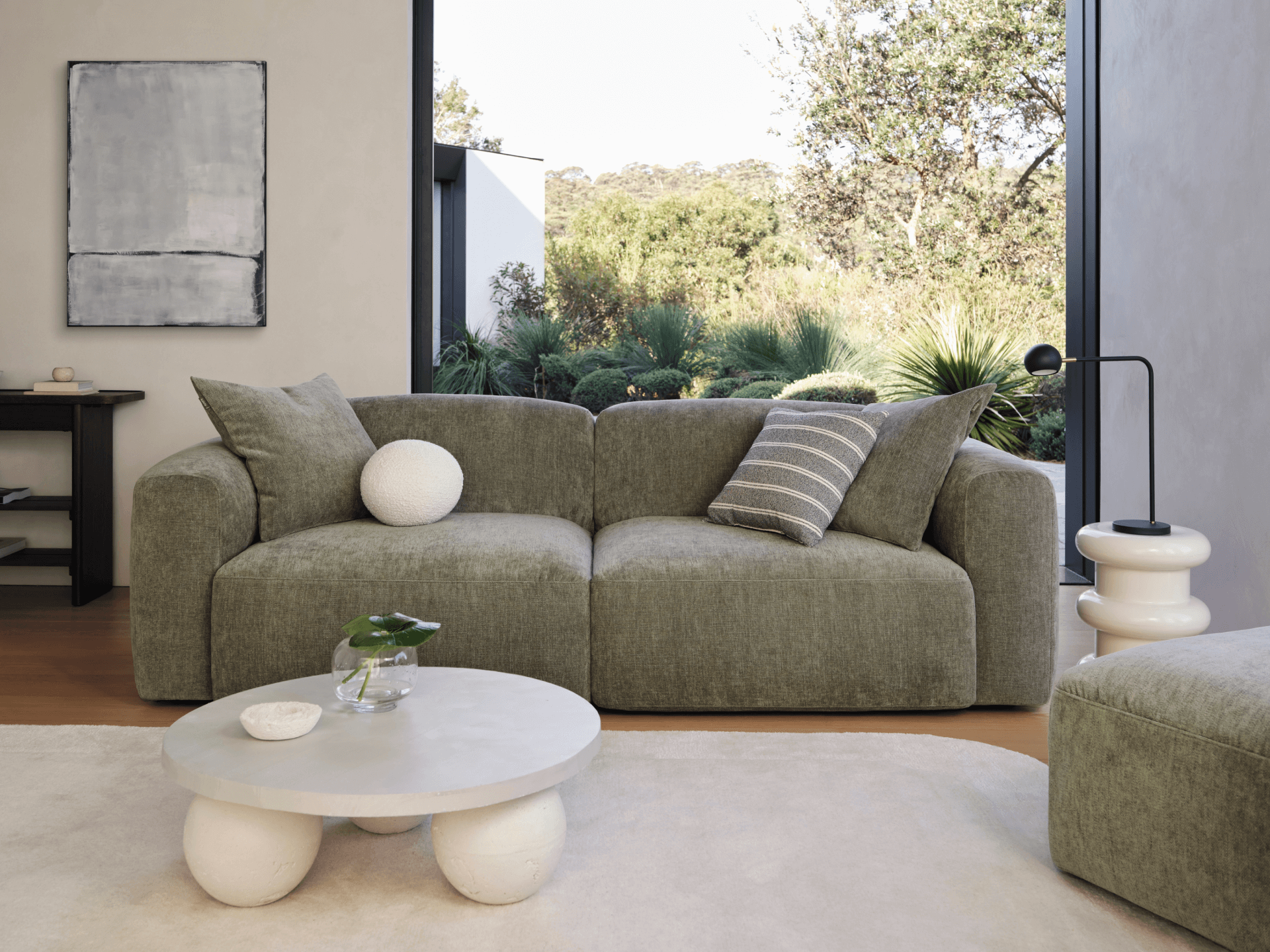
The Torquay leans into generous proportions, soft rounded curves, and a buttery, huggable look. It's deliberately less boxy than the typical modular sectional, with a silhouette that reads more "elevated lounge" than "stack of foam blocks."
The fabric range is custom-designed by Koala in their Sydney studio and isn't sold anywhere else. Options span soft creamy beiges (Pearl Moon), rich earthy browns (Bronzed Aussie), deep espresso tones (Midnight Mocha), fresh greens (Forest Dawn), airy silver-greys (Moonlit Silver), and bright coastal whites (Silver Sand). Most fabrics are made with at least 35% recycled polyester, and all are water-resistant and machine washable.
Flexibility: 5/5
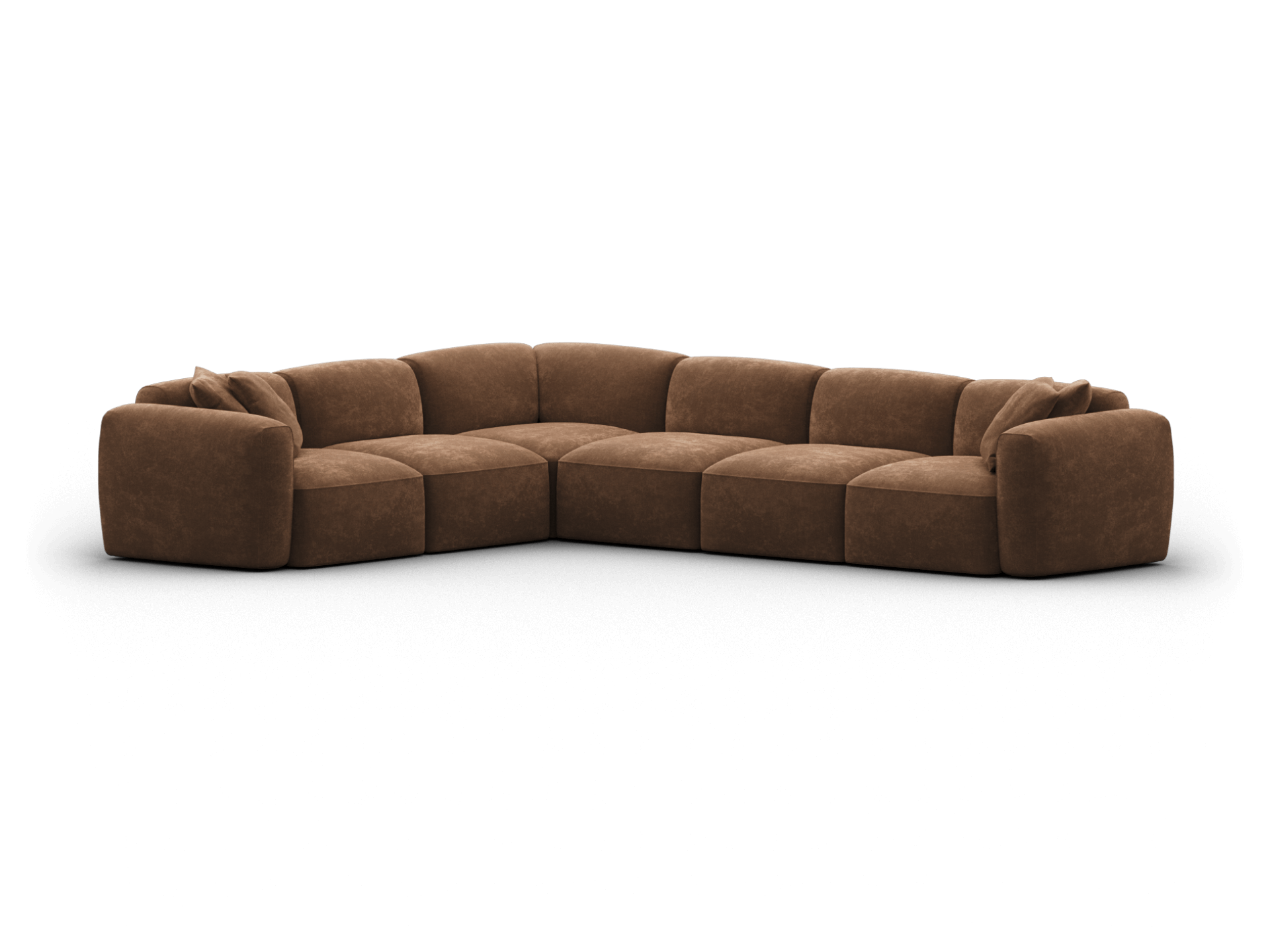
This is where modular sectionals earn their premium, and the Torquay doesn't cut corners. You can build it as anything from a 1-seater armchair up to a 10-seat sofa with corners and chaises. The Quick-Lock connectors snap sections together without tools, so reconfiguring takes minutes rather than an afternoon.
Two section widths (32 inches for compact spaces, 39 inches for a roomier feel) give you genuine sizing flexibility most modular brands don't offer. Add a corner when you move into a bigger place. Split it into a sofa plus armchair when the kids leave. Send one section into a home office. The system is built to grow and shift with you.
And because every cover is removable and machine washable, you can refresh the look (or recover from a spill) without buying anything new. Replacement covers in different fabrics let you genuinely change the sofa's vibe seasonally if that's your thing.
Configuration ideas for different spaces
One of the biggest advantages of a modular system is that it can fit almost any room. Here are the configurations that tend to work best at different square footages:
| Space | Configuration | Why it works |
|---|---|---|
| Studio or small apartment (under 600 sq ft) | 2-section sofa or armchair plus ottoman | Full-depth comfort without dominating the room |
| Standard living room | 3-section sofa with chaise | The classic L-shape; chaise gives you a stretch-out spot |
| Family room or open plan | 5- to 6-section corner setup | Seats a crowd without breaking the room's flow |
| Large open-plan space | 7- to 10-section U-shape | Creates a conversation circle that fixed sofas can't replicate |
| Multi-room household | Build big now, split later | Send a 1-section armchair to a home office or nursery as needs change |
The Torquay also has matching armchair and ottoman pieces that integrate with the main sofa, so you can extend the look across the room without mixing pieces from different ranges.
Who the Torquay is right for
The Torquay is the strongest fit if any of these describe you:
- You spend serious time on your sofa and want a deep, plush sit you can sink into
- You're shopping for a sofa that needs to grow or change with your household over the next decade
- You have kids, pets, or a lifestyle where washable covers genuinely matter (not just "would be nice")
- You want a sectional that looks softer and more inviting than the typical squared-off modular look
- You move every few years and need a sofa that can be broken down, transported, and reassembled without tools
For a deeper read on the modular category overall (including configuration guides for different room sizes and how to think about long-term value), our ultimate guide to the best modular sofas in the US goes section by section.
Frequently asked questions
What's the difference between a modular sectional and a regular sectional?
A regular sectional is one piece of furniture in a fixed L or U shape. A modular sectional is built from individual seat, corner, chaise, and ottoman modules that connect together, can be rearranged, and (in most cases) can be expanded with additional modules later. The practical advantage is flexibility: you can reshape the sofa to fit a new room, split it into smaller pieces, or grow it as your household grows. For a deeper breakdown, our guide on modular vs sectional sofas walks through the trade-offs.
Are modular sectionals comfortable?
Yes, when the seat construction is right. Look for high-density foam (or a foam plus spring combination), at least 22 inches of seat depth, and proper back support. Modular doesn't have to mean less comfortable than a fixed sectional. The Torquay range, for example, is deliberately built around deep, squishy comfort with multi-layer cushioning and a sprung base.
How long do modular sectionals last?
A well-made modular sectional with a hardwood frame, high-density foam, and replaceable covers can last 10 to 15 years or longer. The replaceable covers matter a lot here: a fixed sofa often gets retired when the upholstery wears out, but a modular system lets you swap covers and keep the underlying frame and foam going. That's a big part of the long-term value math. The Torquay is backed by a 5-year limited warranty.
Can you add to a modular sectional later?
With a true modular system, yes. The Torquay is designed for exactly this. You can order individual modules (corners, chaises, extra seats, ottomans) and clip them onto an existing setup using the Quick-Lock connectors. The fabric range stays consistent so new modules match the originals.
What size modular sectional do I need?
Rough sizing guide: a 2-section setup fits a small apartment or studio (under 600 square feet). A 3-section sofa with a chaise is the standard family configuration and fits most living rooms. A 5- to 6-section corner setup suits open-plan rooms or larger family spaces. Always measure your wall length and door clearances before ordering, and remember to leave at least 30 inches of walkway around the open side.
Building the right modular setup
The best modular sectional is the one that lines up with the things you'd actually rank highest. The Torquay scores at the top across all three of comfort, style, and flexibility, which is why it's our pick for 2026. Deep, squishy seats. Soft, design-forward silhouette. Genuine modularity that can grow with your space and your life. And washable, replaceable covers to keep it all looking fresh as you go.
Browse the full modular sofa range to compare configurations, fabric options, and module add-ons.


