The Best Futon Mattress for Back Support: A 2026 Buying Guide
A good futon mattress does more than fold away when guests leave. The right one gives you even, medium-firm support that holds your spine in a natural line all night; the wrong one — usually thin and stuffed with loose cotton — leaves you feeling the frame by morning. This guide explains what makes a futon mattress supportive, how to match fill, thickness, and frame to how you sleep, and when a sofa bed is the smarter long-term choice.
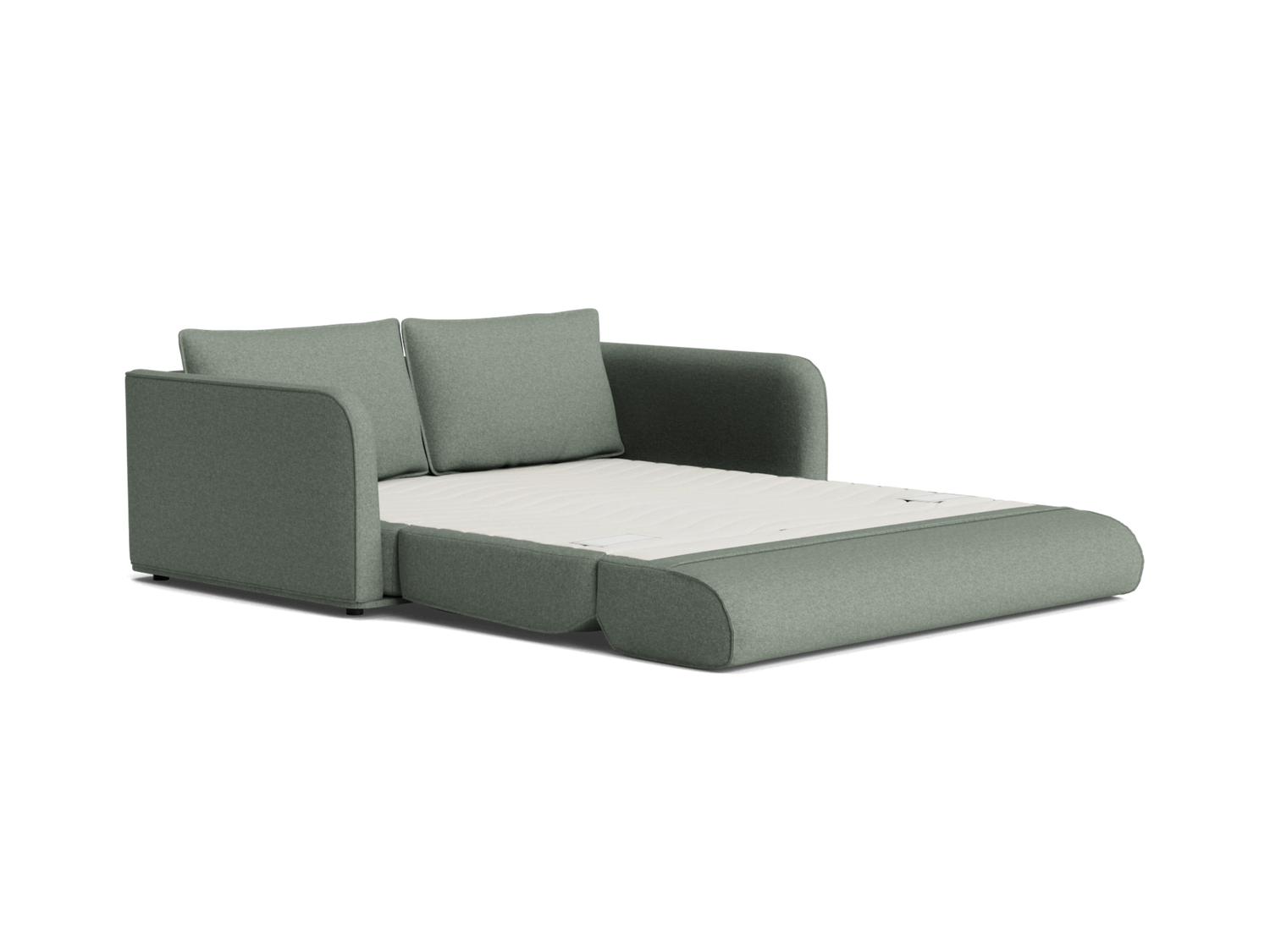
If you sleep on a fold-out surface most nights, it's worth weighing a traditional futon against a purpose-built sofa bed — more on that difference below.
What Makes a Futon Mattress Good for Back Support
A futon mattress supports your back well when it combines a medium-firm feel, at least 8 inches of thickness, and a core of coils or high-density foam. The three work together: firmness stops uneven sinking, thickness keeps you off the frame, and the core delivers steady push-back.
Use this checklist to judge any futon — or a sofa bed built for sleeping — against the same standard.
|
What to look for |
Why it matters for your back |
Aim for |
|
Firmness |
Too soft lets hips sink; too hard adds pressure |
Medium-firm |
|
Thickness |
Thin pads let you feel the frame |
8–10 inches |
|
Core material |
Even support prevents sagging |
Innerspring, hybrid, or high-density foam |
|
Even wear |
Dips form where you sit and sleep |
Rotate/flip-friendly design |
|
Use frequency |
Nightly sleep needs more durability |
Match build to how often you sleep on it |
Futon Mattress Materials and How Each Affects Back Support
A futon mattress fill is the layer inside that sets how firm, supportive, and durable the bed feels. The five common fills — memory foam, high-density foam, innerspring/coils, cotton, and latex — each behave differently, and fill matters more for support than any other factor. Here's how they compare.
|
Fill type |
Feel |
Best for |
Watch out for |
|
Innerspring / coils |
Firm, bouncy, even |
Back support, everyday sleep, couples |
Weight; can be noisy if low quality |
|
High-density foam |
Firm, stable |
Support with less weight than coils |
Cheaper low-density foam packs down |
|
Memory foam |
Soft, contouring |
Side sleepers, pressure relief |
Sleeps warmer; less bounce |
|
Latex |
Firm, responsive, durable |
Long-term support, hot sleepers |
Heavier; higher price |
|
Cotton (batting) |
Firm then soft |
Occasional guest use, floor futons |
Compresses fast; least supportive long-term |
Innerspring and coils give the most even support, pushing back across the whole surface to keep a folding bed from sagging in the middle. High-density foam offers similar stability with less weight — check the density, since cheap low-density foam flattens fast. Memory foam contours and eases pressure at the shoulders and hips, which side sleepers tend to prefer, but it sleeps warmer. Latex is firm, springy, and the most durable fill. Cotton batting feels firm at first but compresses with use, so all-cotton futons suit occasional use more than nightly sleep. Many quality futons combine fills — foam over coils, or cotton around a foam core — and CertiPUR-US®-certified foam is made without certain restricted chemicals.
Thickness and Firmness: Why 8 Inches and Medium-Firm Matter
For back support, look for a futon mattress at least 8 inches thick with a medium-firm feel. Thickness gives the layers room to cushion you before you reach the frame; medium-firm keeps you from sinking unevenly. Together they hold your spine in a natural, level line.
Thickness is the total height, in inches. Thin 3-to-6-inch futons are fine for a floor setup or occasional guest, but you may feel the slats or floor on a folding frame. An 8-to-10-inch futon has enough depth for coils or layered foam to work, which is why it's the standard for regular sleep.
Firmness describes how soft or hard the surface feels, often rated on a 10-point scale where 1 is softest, and 10 is firmest. There's no industry-wide standard, but according to the Sleep Foundation, medium-firm generally sits around 6 on that scale, and most sleepers are comfortable somewhere between 5 and 7 depending on their weight and sleep position. Aim for that range: too soft and your hips sink; too firm and your shoulders and hips carry too much pressure. Your ideal point is covered next.
How to Choose a Futon Mattress for Back Support
Choose a futon by matching four things to your needs: sleep position, body weight, use frequency, and size. Get these right and support follows.
Sleep position sets your firmness target. Back and stomach sleepers do better toward the firmer end (closer to 7), which keeps the hips from dipping. Side sleepers prefer the softer end (closer to 5) with a contouring memory-foam layer that gives at the shoulder and hip.
Body weight shifts the same dial. Heavier sleepers press deeper into a mattress, so a firmer, coil-based futon holds up better and lasts longer. Lighter sleepers can go slightly softer without losing support.
Use frequency decides how much to invest. For nightly sleep, prioritize an 8-inch-plus innerspring or hybrid that resists sagging; for a guest room used a few times a year, a foam or cotton futon is fine. Match the size to your space using US conventions — Twin, Twin XL, Full, Queen, King, or California King. A Full suits one adult or occasional couples; a Queen gives two people more room. To compare specific options, our roundup of the best futon mattresses ranked covers more.
Care and Maintenance: Protecting Support Over Time
Rotate and, where the design allows, flip your futon mattress regularly to keep its support even. Folding beds take concentrated pressure at the hinge and the spots where you sit and sleep, so moving the mattress spreads that wear and prevents an early dip.
Rotate the mattress head-to-foot every one to three months. If it's double-sided, flip it top-to-bottom on the same schedule; single-sided and memory foam models should only be rotated. Use a fitted, washable cover to protect the fill from sweat and spills, let the mattress air out occasionally, and avoid creasing it in tight storage. With this routine, a quality futon mattress typically lasts around 5 to 10 years — nightly use shortens that, occasional guest use extends it. Coil and high-density foam models hold their shape longest; all-cotton futons wear out soonest.
Frame Pairing: Metal vs. Wood, Bi-Fold vs. Tri-Fold
Your frame affects support as much as the mattress — it's the foundation the futon folds over. The two choices that matter are material (metal or wood) and fold style (bi-fold or tri-fold). Here's how they compare.
|
Frame factor |
Options |
Better for |
Notes |
|
Material |
Metal |
Budget, lightweight |
Can flex or squeak over time |
|
Material |
Wood |
Stability, higher weight capacity |
Heavier, usually pricier |
|
Fold style |
Bi-fold |
Everyday sleeping |
Folds once; wider sleep surface |
|
Fold style |
Tri-fold |
Compact chairs, loveseats |
Folds twice; more upright seating |
Metal frames are lighter and cheaper, but the better ones use thicker-gauge steel that resists flexing. Wood frames — especially hardwood with a solid slat system — feel more stable and support more weight, which matters for nightly sleep or two people. Either way, closely spaced, sturdy slats stop the mattress from sagging between them.
Bi-fold frames fold once into a wider, flatter surface, so they suit back support and regular sleep. Tri-fold frames fold twice into a chair-like shape — great for compact seating but a narrower, more segmented bed. Match the mattress fold to the frame: a bi-fold mattress belongs on a bi-fold frame.
Who Should (and Shouldn't) Use a Futon Mattress for Back Support
A futon mattress suits anyone who needs one piece of furniture to be both seat and bed — as long as it's a supportive 8-inch-plus model. It's a practical fit for studios, guest rooms, dorms, and small apartments where a dedicated bed won't fit. If you're furnishing a first place, our guide to the best modern futon beds for adult apartments covers more layout-friendly options.
A supportive futon works well for occasional and regular sleepers who pick the right build — medium-firm, thick enough, with coils or hybrid layers. It's less ideal if you want the deepest cushioning of a full bed every night, if folding and rotating is difficult for you, or if you only have room for a thin cotton model. In those cases, a purpose-built convertible bed is often the better long-term call — which brings us to how futons compare with sofa beds.
Futon vs. Sofa Bed: A More Supportive Everyday Option
A sofa bed usually gives better back support than a folding futon, because its sleep surface is engineered as a proper bed, not a seat cushion you fold flat. A futon folds one mattress between sitting and sleeping; a sofa bed converts a couch into a dedicated sleep surface; a daybed is a fixed frame with a standard mattress. Here's how the formats compare.
|
Feature |
Futon |
Sofa bed |
Daybed |
|
Sleep surface |
One folding mattress |
Dedicated sleep surface |
Standard Twin mattress |
|
Back support |
Good with 8-in coil/hybrid |
Best (built for sleeping) |
Good (uses a real mattress) |
|
Looks like a bed? |
Somewhat |
No — looks like a sofa |
Yes |
|
Best for |
Small spaces, guests |
Everyday sleep + real seating |
Single sleepers, reading nooks |
|
Setup |
Fold flat |
Convert the sofa |
Always ready |
Futons win on price and simplicity, and a quality one supports your back well for the money. Sofa beds tend to deliver the most bed-like support, since the surface is designed to be slept on, not folded into a seat by day.
Where Koala's sofa beds fit

Koala designs its sofa beds around a dedicated sleep surface, not a thin fold-over pad. All three use Kloudcell™ — Koala's open-cell comfort foam, the same one in Koala's mattress range — over an FSC®-certified timber frame with CertiPUR-US®-certified foam. All three are designed by Koala in Sydney and come with a 120-day free trial and a 5-year warranty.
|
Koala sofa bed |
Sizes |
Sleep surface |
Best for |
From (at time of writing) |
|
Koala Sofa Bed [4th Gen] |
46" Twin XL / 64" Full / 70" Queen |
FlipBed™ sit-to-sleep with integrated Kloudcell™ topper; deep 23.5" seats with an angled backrest |
Small apartments, guest rooms, everyday use |
from $1,450 (Premium fabric from $1,550) |
|
Byron Sofa Bed [3rd Gen] |
92" Queen |
FlipBed™ with a 6-inch integrated Kloudcell™ sleep surface; Zero Disturbance™ motion isolation |
Couples, deep-seated lounging |
from $2,195 (Premium fabric from $2,395) |
|
Wanda Sofa Bed |
99" Queen |
4-in-1 with a slide-out queen-size platform and Kloudcell™ topper; elevated sleep height |
Versatile layouts, easier in-and-out |
from $3,295 |
The Koala Sofa Bed [4th Gen] is the most flexible pick — the only one in Twin XL, Full, and Queen widths, with a FlipBed™ design that converts with no clunky mechanism. The Byron Sofa Bed [3rd Gen] adds a 6-inch Kloudcell™ sleep surface and Zero Disturbance™ motion isolation to keep one sleeper from feeling the other move — handy for couples. The Wanda Sofa Bed is the 4-in-1 option: sofa, chaise, daybed, and a queen-size slide-out bed with the largest hidden storage in the range.
Two notes for guests: the 4th Gen and Byron have machine-washable, water-resistant covers, while Wanda's covers are spot-clean only; and the sizes above are sofa-width labels, with bed mode described as queen-comparable rather than an exact mattress measurement. Prices are regular pricing at the time of writing — Koala promotes frequently, so check the live page.
Prefer a sleeper that's built for backs from the start?
If everyday back support matters more than a fold-away pad, compare a futon to a purpose-built sofa bed. Koala's sofa beds swap the thin pad for a Kloudcell™ sleep surface on a sturdy, FSC®-certified frame, backed by a 120-day free trial and a 5-year warranty. Take a look at the Koala Sofa Bed [4th Gen] from $1,450, or Shop Koala's Sofa Beds to compare the range.
Frequently Asked Questions
How thick should a futon mattress be?
For everyday sleeping and back support, choose a futon mattress that's at least 8 inches thick — ideally 8 to 10. That depth gives the innerspring or foam layers room to cushion pressure points and keep your spine aligned. Thinner 3-to-6-inch futons suit occasional guest or floor use but can let you feel the frame beneath.
How long does a futon mattress last?
A quality futon mattress typically lasts around 5 to 10 years with regular rotation. Innerspring and high-density foam models hold their shape longest, while all-cotton futons compress faster and may need replacing sooner — nightly use shortens the lifespan, while occasional guest use extends it.
Can you use a regular mattress on a futon frame?
Usually not a standard one. Most futon frames are built to fold, so a regular mattress is too thick and rigid to bend at the hinge. Use a purpose-built bi-fold or tri-fold futon mattress, or a thin, flexible mattress designed for convertible frames.
Is a futon good for everyday use?
Yes, if you pick the right one. A medium-firm futon mattress at least 8 inches thick with innerspring or hybrid construction can comfortably support nightly sleep. Thin cotton-only futons are better kept for occasional use, and a dedicated sofa bed is worth considering if you sleep on it most nights.
Do futon mattresses have springs?
Some do. Innerspring and hybrid futon mattresses contain coils for firmer, more even support, while others rely only on foam (memory, poly, or latex) or traditional cotton batting. For back support, coil or hybrid builds generally perform best.