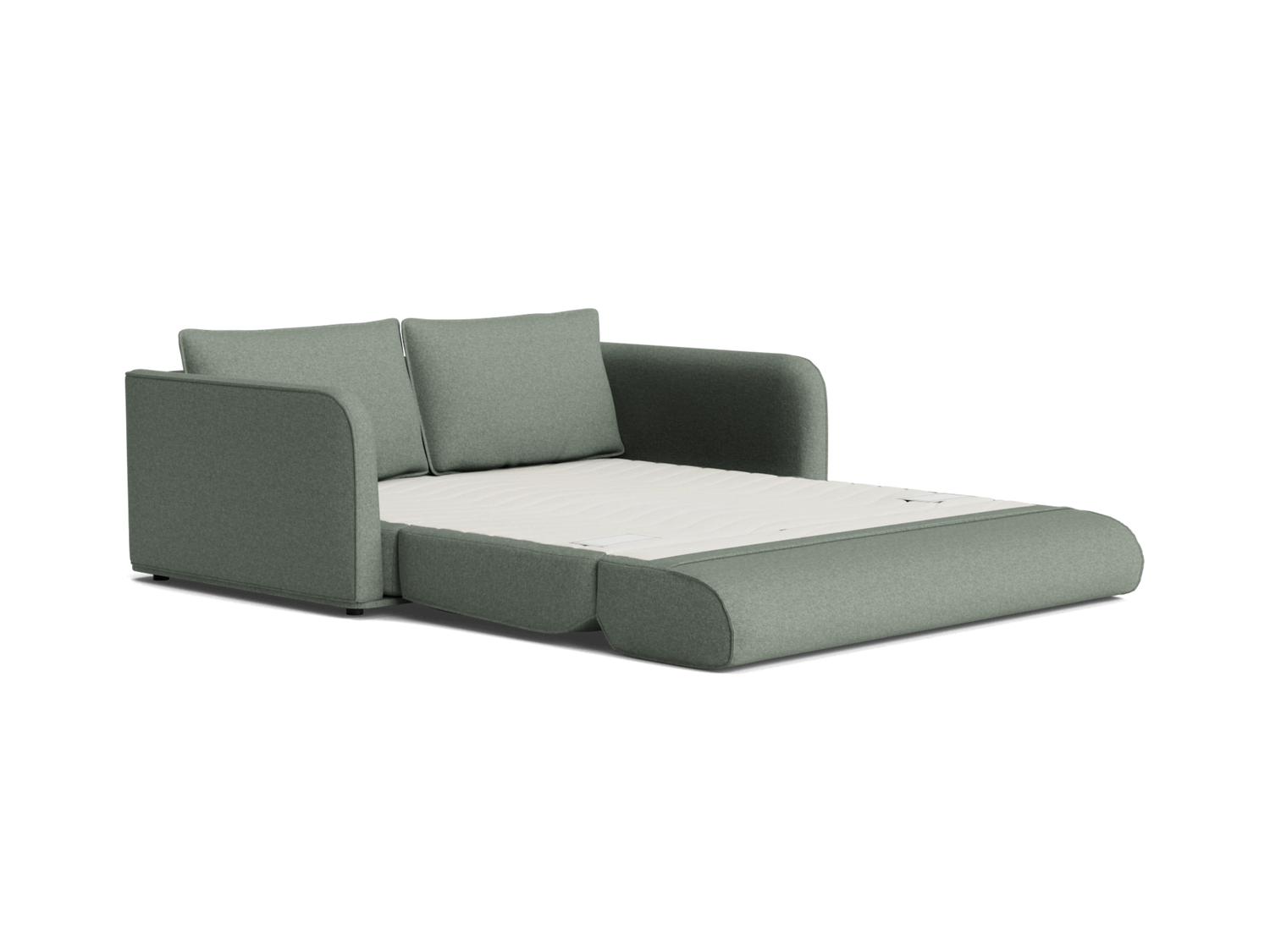
Sofa Sectionals: The Complete Guide to Buying for Your Space
Share
Buying a sofa sectional is one of the bigger decisions you'll make for your living room. The shape and configuration you choose will define how the whole space works — how many people it seats, how the room flows, and how easy it is to live in day to day. This guide covers everything you need to know before you buy.
The short answer: A sofa sectional is a large sofa made up of two or more connected pieces — typically a main sofa body combined with a chaise, corner unit, or additional seat. Unlike a standard sofa, a sectional can be arranged in an L-shape, U-shape, or custom layout to suit the size and shape of your room. That flexibility is the whole point.
What is a sofa sectional?
A sofa sectional is a multi-piece sofa designed to be configured in different arrangements to fit your space. Each unit — a corner piece, chaise, armless seat, or ottoman — connects to the others to form one continuous seating area.
The key difference from a regular sofa is flexibility. A standard sofa is a fixed shape. A sectional can turn a corner, wrap around a coffee table, or fill an irregular wall. That's why sectionals have largely replaced the traditional three-seater in open-plan homes — they do more work in the same footprint.
Koala's modular sofa collection is built around this principle — individual pieces you connect and rearrange to suit your space and how your life changes.
If you're still weighing your options, our guide to the best sofas and sectionals covers the full landscape.
Types of sectional sofa configurations
There are four main sectional configurations. Each suits a different room size and lifestyle.
L-shaped sectionals are the most common. One arm extends longer than the other, forming an L. They work in square and rectangular rooms, define a seating zone in open-plan spaces, and are easy to place against a wall. Best for: most living rooms, first-time sectional buyers.
U-shaped sectionals have seating on three sides, creating a wraparound effect. They need more floor space but seat significantly more people and create a natural gathering point. Best for: large rooms, family households, anyone who entertains regularly.
Chaise sectionals pair a standard sofa with a chaise lounge end — one long, extended section on one side. They're the most compact sectional option and the easiest to deliver through tight spaces. Best for: apartments, smaller living rooms, anyone who wants the sectional feel without a large footprint.
Modular sectionals are made up of individual, interchangeable pieces that you can rearrange into multiple configurations. Start with a small L-shape and add pieces over time, or reconfigure completely when you move. Best for: renters, growing households, anyone who moves frequently. Browse Koala's modular sofas to see this in practice.
|
Configuration |
Min. room size |
Seats |
Flexibility |
Best for |
|
L-shaped |
12×14 ft |
4–6 |
Low |
Most living rooms |
|
U-shaped |
16×16 ft |
6–8 |
Low |
Large rooms, entertaining |
|
Chaise |
10×12 ft |
3–4 |
Low |
Apartments, smaller spaces |
|
Modular |
Any |
3–8+ |
High |
Renters, families, frequent movers |
For product-by-product comparisons, our best sectional sofas of 2026 roundup has you covered.
How to measure your room for a sectional
Measure the room before you buy — not after. Two numbers matter most: clearance and delivery access.
Room clearance. Leave at least 14-18 inches between the front of the sofa and your coffee table—an architectural standard that balances comfortable reach with necessary legroom. Main walkways—the paths people use to move through the room—need 30–36 inches of clear width to prevent traffic jams. If your room can't give you both, the sectional is too large for the space.
Minimum room sizes. A chaise sectional fits most rooms from 10×12 feet without overwhelming the layout. A standard L-shape is more comfortable from 12×14 feet to preserve traffic flow, while a larger U-shaped sectional generally needs at least a 16×16 foot footprint to accommodate the double-extended sections without crowding the center of the room.
Delivery access. Measure doorways, hallways, and any stairwell turns. Standard US interior door openings run 32–36 inches wide. A modular sectional is the easiest option here — each piece ships in its own box and moves independently through tight spots.
For a step-by-step walkthrough, use our how to measure for a sectional sofa in 6 simple steps guide before you order.
Modular vs. fixed sectionals: which suits your lifestyle?
Fixed sectionals arrive as one or two large pieces with a set shape. Modular sectionals arrive as individual units you connect and rearrange yourself.
|
Factor |
Fixed sectional |
Modular sectional |
|
Overall look |
More seamless |
Slight visible joins |
|
Layout flexibility |
Set shape only |
Rearrange anytime |
|
Moving house |
Hard to get through tight spaces |
Each piece moves independently |
|
Damage repair |
Replace the whole sofa |
Replace just the affected module |
|
Covers |
Varies by brand |
Often removable and washable |
|
Growing household |
Buy new sofa |
Add modules as needed |
|
Best for |
Long-term homeowners, stable spaces |
Renters, families, frequent movers |
If you're renting, moving soon, or have a household that changes — kids, pets, housemates — a modular sectional is the practical call. Koala's Torquay and Bangalow are built for that kind of life.
How to choose the right fabric
The fabric you choose determines how your sofa holds up over years of use — not just how it looks on day one.
-
Standard fabric (linen, cotton blends) is comfortable and comes in the widest range of colors and textures. It's well-suited to households with light use, no pets, and older kids or adults.
-
Performance fabric is engineered to resist staining, pilling, and heavy wear. It's tightly woven to repel spills and can usually be wiped clean. If you have pets or young children, prioritize performance over appearance.
-
Machine-washable covers are worth calling out separately because they're a construction feature, not a fabric type. Some sofas — particularly modular ones — have zip-off covers that go straight in the washing machine. Check the product specs, not just the fabric description.
-
For pet households specifically: look for fabrics described as scratch-resistant or pet-friendly. These are typically tight microfibers or performance weaves that don't catch claws or collect fur as readily as looser textures.
What to look for in construction
Construction quality isn't visible in a photo — it's in the spec sheet. Here's what actually matters.
-
Frame material. Kiln-dried solid hardwood is the benchmark. It resists warping and cracking over years of use. Softwood or particleboard frames are cheaper but more prone to loosening at the joints after a few years of regular sitting.
-
Foam density. Foam is graded in pounds per cubic foot (PCF). Higher density means the cushion holds its shape longer and doesn't sag prematurely. A density of 1.8 PCF sits around the industry average for everyday use residential sofa seat cushions, balancing supportive comfort with long-term resilience. Anything below 1.5 PCF is considered low-density and will compress noticeably within a couple of years of regular use.
-
Suspension system. The base beneath the cushions takes constant load. Sinuous steel coils — S-shaped springs fixed across the frame — are the most common system in mid-to-premium sofas. They distribute weight evenly and recover consistently. Webbing-only bases are less durable over time. Eight-gauge coils are considered higher quality than lighter gauges.
When shopping, look these three specs up. Most product pages don't lead with them — but they're what separates a sofa that lasts 10 years from one that needs replacing in four.
Sofa sectionals for small spaces and apartments
A sofa sectional is not just for large rooms. You just need to match the configuration to the space.
For rooms under 12×12 feet, a chaise sectional is the most practical option. It gives you the extended lounging end without the full L-shape footprint. Look for models with tighter arm profiles — wide track arms eat into usable seat width.
For apartments with narrow hallways or doorways, a modular sectional is the logical choice. Each module moves through standard doors independently, so you're not trying to angle a 110-inch frame around a hallway corner.
One more thing: don't push the sofa hard against the wall. Floating it 2–4 inches forward makes the arrangement look more intentional — and gives you just enough clearance to vacuum behind it.
Koala's modular sofas are designed to start small and scale up as your space changes.
Ready to find your sofa sectional?
Koala's modular sofas are designed to fit any room, handle any household, and move with you when life changes. Start with what you need now — add more later.
Frequently Asked Questions
What's the best configuration for a sofa sectional in an open-plan living space?
An L-shaped or U-shaped sectional works best to anchor an open-plan area without relying on walls. Point the longer end toward the main sightline — TV or fireplace — and lay a rug underneath to visually define the living zone. A modular sectional is particularly useful here because you can adjust the layout as the room or your needs evolve. Browse Koala's modular sectionals →
Are modular or fixed sectionals better for families with kids or pets?
Modular is usually the better choice for busy households. Individual modules can be replaced if damaged, and many come with removable, machine-washable covers — a practical necessity with kids or pets. A fixed sectional may look more seamless, but you can't swap out one damaged section or clean inside the joins as easily.
What are some tips for arranging a sectional couch in a living room?
Keep at least 14-18 inches between the sofa and the coffee table to balance legroom with an easy reach, and allow 30–36 inches of clearance for main walkways so traffic flows naturally. Avoid pushing the sofa flush against the wall—pulling it out just 3 to 6 inches gives the piece breathing room and creates a visual shadow line that makes the room feel larger. Finally, if the sectional has a chaise, orient it toward the TV or main view rather than a doorway or window to keep the room's entrance feeling open and inviting.
Will a sofa sectional fit in a small living room and through tight spaces?
Yes — with the right measurements upfront. A compact chaise sectional fits most rooms from 10×12 feet; a standard L-shape needs more room from 12×14 feet. For delivery through tight spaces, modular sofas are the easiest option — each piece moves independently through standard doorways. See: How to measure for a sectional sofa in 6 simple steps →
What are the shipping options for sectional sofas?
Most large retailers offer white-glove in-home delivery (assembled in the room, packaging removed) or curbside delivery. Koala's modular sofas — the Torquay and Bangalow — ship as individual module boxes that one or two people can carry upstairs and through standard doorways without specialist delivery equipment. No single unwieldy piece to maneuver.