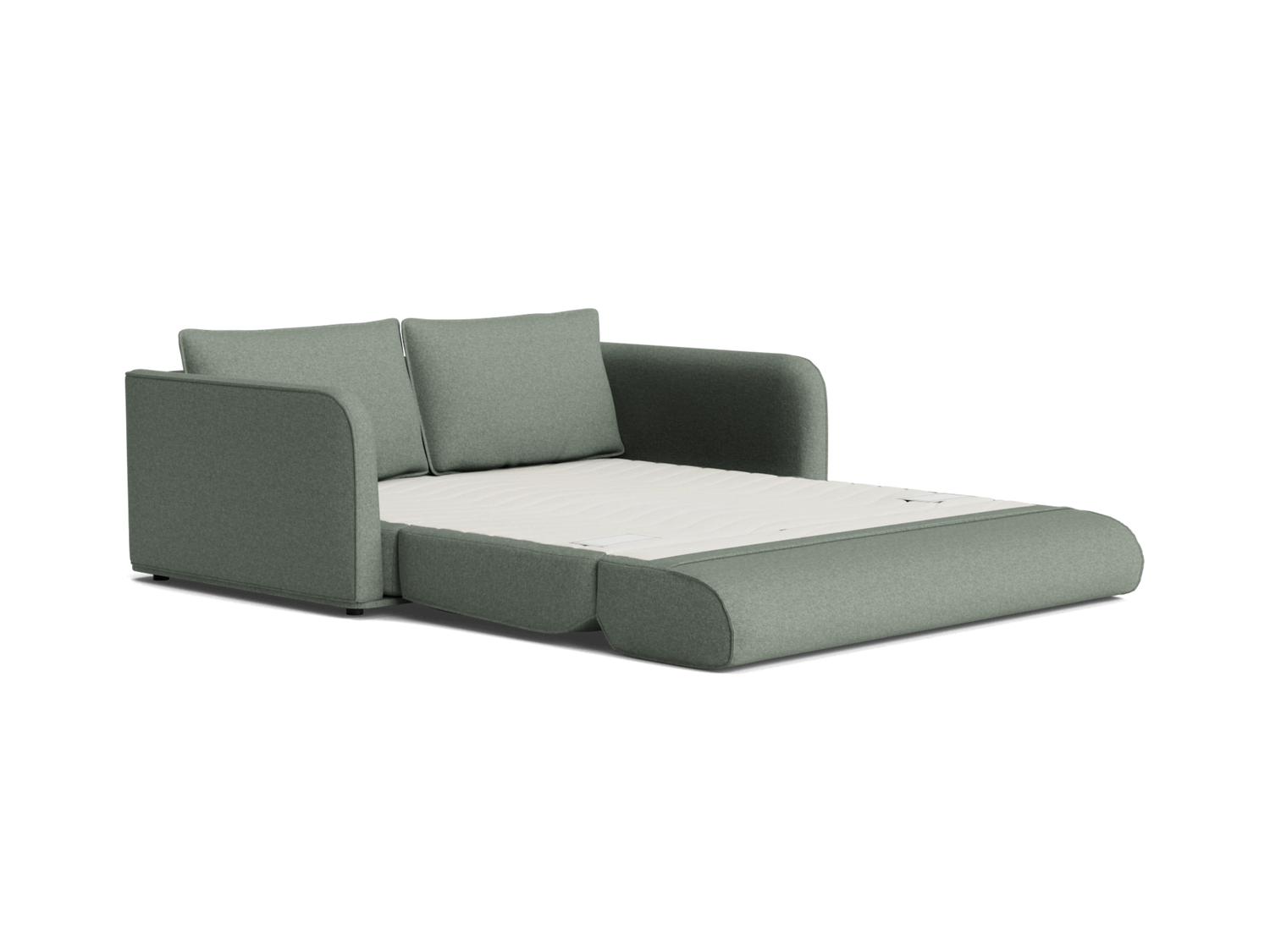
Sectional Sofa vs. Modular Sofa: Which Is Right for Your Living Room?
Share
If you're shopping for a sectional sofa, you've probably already noticed that not all of them work the same way. Some are fixed sets — buy the pieces, put them together, done. Others let you configure, expand, and rearrange whenever you like. That second type has a name: a modular sofa. And choosing between the two is the most important decision you'll make before buying.
This guide walks you through every variable — configuration, sizing, materials, and layout — so you can land on the right call for your space.
The short answer: A sectional sofa is a large, fixed sofa built from two or more joined pieces, usually in an L- or U-shape. A modular sofa uses interchangeable units you can rearrange and expand over time. If your room, lifestyle, or address tends to change, modular wins. If you have a large, permanent space and want one statement piece, a fixed sectional delivers.
What Is a Sectional Sofa?
A sectional sofa is a sofa built from multiple connected pieces — usually two to five — that lock together to form one large seating unit. Most come in a fixed configuration: the pieces are sold as a set and aren't designed to be rearranged or expanded after purchase.
That fixed nature is the key thing to understand. Sectionals are sized and shaped for living rooms that won't change much — big, open spaces where a permanent L- or U-shaped footprint makes sense. If your room, roommates, or address tend to shift, a sectional's rigidity can work against you. Koala's modular sofa collection exists precisely for that situation — sofas built to change as life does.
Types of Sectional Sofas: L-Shaped, U-Shaped, Chaise & More
The configuration you choose determines how your room feels — open or cozy, social or relaxed. Here are the four most common types of sectional sofa.
L-shaped sectional. The most popular layout: a standard sofa on one side with a chaise lounge extending at a 90-degree angle. Typical dimensions run 100"–130" on the long side. Best for rectangular rooms and open-plan spaces where you want to define a living zone without closing it off.
U-shaped sectional. Seating on three sides around an open center. Typically 130"–160" wide — it requires serious square footage (think 15 × 18 ft or more). Best for large family rooms, media rooms, or any space built for a crowd.
Chaise sectional. A two-piece setup: one sofa plus one extended chaise lounge. Smaller footprint than a full L-shape, easier to move through doorways, and ideal for one or two people who want to stretch out.
Curved or bumper sectional. A softer, rounded take on the U-shape. The curved ends (called bumpers) replace sharp 90-degree corners. Works well in square rooms where a hard angle would feel abrupt.
|
Configuration |
Typical Width |
Room Size Needed |
Best For |
|
Chaise sectional |
85"–105" |
12 × 12 ft |
Small rooms, couples |
|
L-shaped |
100"–130" |
12 × 15 ft |
Rectangular rooms, open plans |
|
Curved / bumper |
120"–150" |
14 × 16 ft |
Square rooms, open layouts |
|
U-shaped |
130"–160" |
15 × 18 ft |
Large family rooms, media rooms |
Sectional Sofa vs. Modular Sofa: What's the Real Difference?
A sectional sofa is a fixed set sold together that can't be meaningfully reconfigured. A modular sofa is built from individual, interchangeable units you buy separately, rearrange freely, and expand over time.
That distinction has real consequences. With a fixed sectional, the chaise is always on the same side, the depth is locked in, and if you move, the sofa may not suit your next floor plan. With a modular sofa, you can start with three pieces, add two more next year, flip the chaise to the opposite side when you rearrange the room, and disassemble it to fit through a narrow stairwell.
Browse Koala's modular sofas to see how configurations work in practice — every piece is designed to connect with every other piece. For a side-by-side breakdown, read the real difference between modular and sectional sofas.
|
Fixed Sectional |
Modular Sofa |
|
|
Reconfigurable |
No |
Yes |
|
Expandable later |
Rarely |
Yes |
|
Fits tight doorways |
Harder |
Easier — disassembles |
|
Cover replacement |
Usually not |
Yes (most models) |
|
Best for |
Permanent, large rooms |
Renters, families, changing spaces |
How to Size a Sectional for Your Room
Measure twice, order once. The most common mistake is buying a sectional sofa that technically fits the room but leaves no space to actually live in it.
A practical rule of thumb: your sectional's longest side should be no more than two-thirds the length of the wall it faces. In a 15-ft room (180"), that means a sofa no longer than 120". Leave at least 36" between the sofa and any opposing wall or furniture — 18" is the walkway minimum, 36" is comfortable.
On ceiling height: low-profile sofas (back height under 34") read as smaller in the room and suit standard 8-ft ceilings well. Tall backs (36"+) anchor large spaces but can feel heavy where ceiling height is limited.
If you're working with a tight footprint, the next section covers your best options.
Best Sectional Configurations for Families, Renters & Small Spaces
For families with kids or pets: Choose a modular sofa with removable, machine-washable covers. A fixed sectional locks you into one fabric — a real problem the first time a cushion is stained. The Koala Torquay Modular Sofa and the Koala Bangalow Modular Sofa both offer covers you can remove, wash, and replace, plus configurations you can rearrange as the household grows.
For renters: A modular sofa is almost always the smarter call. You can disassemble it to move, reconfigure it for a new floor plan, and it won't be stranded because your next apartment has a different layout. Most fixed sectionals are effectively cut to fit one room.
For small spaces: A chaise sectional is the most space-efficient option at 85"–105" wide. Better still: a modular two- or three-piece setup where you buy only the pieces your room can hold, then add more later. Modular pieces also disassemble for tight doorways and stairwells.
What to Look for in Fabric & Materials
The fabric you choose affects how your sectional sofa looks in year one — and whether it still looks good in year five.
Performance fabrics: tightly woven polyester blends, often labeled Performance Linen, Performance Velvet, or Performance Canvas — resist staining, hold color longer, and clean up with water. Best choice for households with kids, pets, or anyone who treats the sofa as a second dining table.
Corduroy has a ribbed texture and a soft, relaxed feel that's popular right now. The trade-off: the ridges trap pet hair, and the pile can snag claws. Fine for pet-free households; harder to keep clean otherwise.
Chenille is soft, dense, and more forgiving for everyday use than corduroy. Its tighter woven structure holds up better to friction and repeated contact.
Boucle has a loopy, textured surface that looks high-end but snags easily. Best for low-traffic rooms or spaces without pets.
Removable covers should be non-negotiable if your household involves anything messier than two adults who never eat on the sofa. Confirm covers are machine washable — not just removable.
How to Arrange a Sectional in Your Living Room
Float the sofa. Don't push it flush against a wall — pulling it 12–18 inches away immediately makes the room feel larger and allows air to circulate behind the back cushions.
Anchor it with a rug. The rug should sit under the front legs of all connected pieces, not just the main sofa section. A rug that's too small makes a sectional look like it's hovering rather than grounded.
Protect the walkway. On the chaise side, leave at least 30 inches of clearance for a comfortable path through the room. In square rooms, a U-shaped or symmetric arrangement typically works better than an L — an L-shape in a square room tends to leave one awkward, underused corner.
For more layout options — including how to break up a sectional sofa into separate pieces and style them independently — see our full guide on how to separate a sectional sofa and make it look good.
Shop Koala Modular Sofas
If this guide pointed you toward something flexible, reconfigurable, and built for real life, Koala's modular sofas are worth a close look.
Koala Torquay Modular Sofa — A deep-seat, low-profile modular with removable covers and configurations that scale from two pieces to a full U-shape. Built for rooms — and lives — that change.
Koala Bangalow Modular Sofa — A softer silhouette with the same modular flexibility. A strong match for smaller rooms where you want the presence of a sectional sofa without the permanent footprint.
Both ship to your door in performance fabric options with covers you can actually wash.
Frequently Asked Questions
What's the best configuration for a sectional sofa in an open-plan living space?
An L-shaped or U-shaped sectional sofa works best to anchor the living zone without relying on walls for definition. Place the long arm of the L parallel to the room's longest sight line. For a modular sofa, you can add or remove pieces as the layout evolves — useful when the space doubles as a dining or work area.
Are modular or fixed sectionals better for families with kids or pets?
Modular sofas win here. A fixed sectional locks you into one layout and one fabric, which becomes a problem the first time a cushion is stained or the room changes purpose. Modular sofas with removable, machine-washable covers — like the Koala Torquay or Bangalow — let you swap covers, rearrange pieces, and adapt as the family grows. For pet owners, prioritize tightly woven performance fabrics over loose-weave boucle or corduroy.
What are some tips for arranging a sectional couch in a living room?
Float it 12–18 inches off the wall, anchor it with a rug under the front legs of all pieces, and leave at least 30 inches of walkway on the chaise side. In square rooms, a U-shaped or symmetric arrangement works better than an L. For more layout ideas, see how to separate a sectional and make it look good.
Will a sectional fit in a small living room and through tight spaces?
Most standard L-shaped sectional sofas run 100"–130" wide — too large for rooms under 12 × 15 ft. A modular sofa is the better move for small spaces: buy only the pieces that fit, and disassemble them to navigate doorways and stairwells. Always measure your sofa, doorway, and any hallway turns before ordering.
Do you deliver sectional sofas across the US, and what are your warranty and return policies?
We provide free and fast delivery on all products across the 48 contiguous United States (USA, excluding Alaska and Hawaii). 120-day free trial. Once your order has been dispatched, you'll receive tracking details via email.
Also worth reading: sectional vs. sofa and loveseat — ways to choose the best seating and the real difference between modular and sectional sofas.