Daybed vs. Sofa Bed: What's the Difference and Which Should You Buy?
Share
If you've been shopping for a day bed sofa, you've probably noticed the terms get used interchangeably — daybed, sofa bed, sofa daybed, day bed couch. They're not the same thing, and picking the wrong one is an expensive way to find out. Here's how they actually differ, and which one fits your space.
The difference comes down to which job the furniture does best. A daybed is a bed first and a couch second. A sofa bed is a sofa first and a bed second. Everything else — size, comfort, mattress requirements, price — follows from that.
What is a daybed?
A daybed is a Twin-size bed frame with a back panel and two side panels, designed to work as a couch by day and a bed by night. A standard Twin mattress measures 38 inches wide by 75 inches long, it sits seamlessly in a hybrid category between bedroom and living room furniture.
A few things to know before you buy:
-
The mattress is usually sold separately. Most daybed frames ship without one, so budget for a Twin mattress on top of the frame price.
-
No box spring needed. Nearly all modern daybeds use a slatted base that supports the mattress directly.
-
Many include a pull-out trundle. A trundle is a second, lower mattress platform on casters that rolls out from under the frame — handy when one sleeping spot isn't enough. Some trundles pop up to main-bed height to create a larger sleep surface; most stay low to the floor.
-
The back is usually unfinished. Daybeds are built to sit against a wall, so they rarely work floating in the middle of a room.
What is a sofa bed?
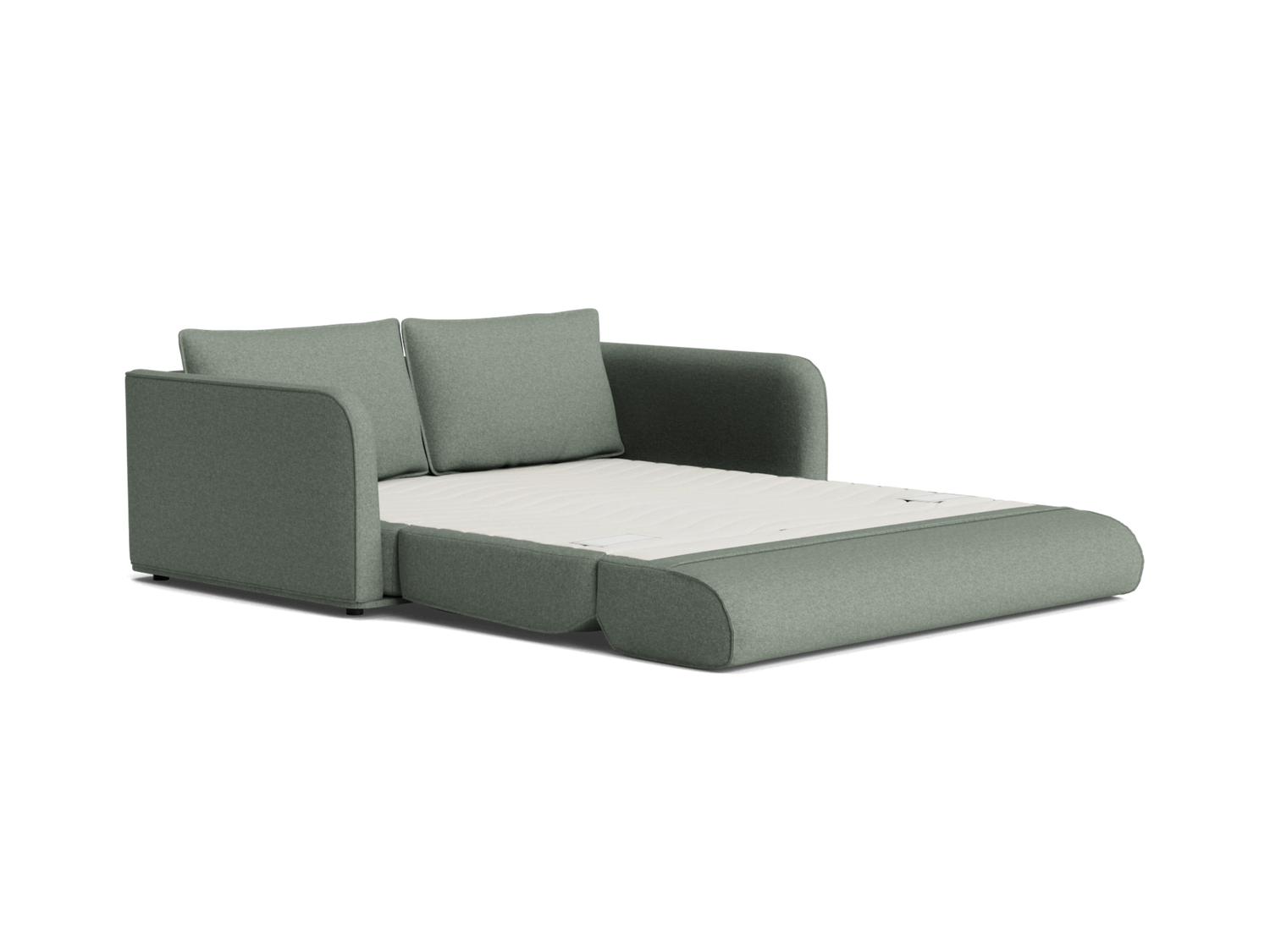
A sofa bed is a fully upholstered sofa with a fold-out or convertible mattress built into the frame. Unlike a daybed, it looks and sits like a regular couch — cushioned back, arms, sofa-depth seat — until you convert it for sleeping.
That built-in mattress is the key practical difference. With a sofa daybed setup you're buying a frame and a mattress separately; with a sofa bed, the sleep surface is included and sized to the frame, commonly in Full or Queen. Conversion mechanisms vary from pull-out metal frames to fold-over designs that flip open in seconds. If you want a side-by-side of the major mechanism types, browse Koala's sofa bed collection to see how fold-out designs differ from the old pull-out style.
Like daybeds, sofa beds don't need a box spring — the mechanism supports the mattress on its own.
Daybed vs sofa bed: side-by-side comparison
|
Daybed |
Sofa bed |
|
|
Size |
Twin (some Full) |
Full or Queen most common |
|
Sleeping capacity |
1 person (2 with trundle) |
2 people |
|
Mattress |
Standard Twin, sold separately |
Built in, sized to frame |
|
Mattress thickness |
Most trundles fit a mattress around 6–8 inches thick so it clears the frame — check your frame's clearance before buying. |
Set by the mechanism |
|
Mechanism |
Pull-out trundle on casters |
Fold-out or pull-out conversion |
|
Everyday seating comfort |
Bed-firm, mattress-depth seat |
True sofa comfort |
|
Footprint |
Twin-bed footprint, wall placement |
Sofa footprint, can float in a room |
|
Box spring needed |
No |
No |
Which should you buy? By room and use case
The right choice depends on the room, not the furniture. Here's the honest breakdown.
Guest room
A sofa bed if the room does double duty (home office, hobby space), a daybed if it's purely a spare bedroom. A daybed with trundle sleeps two guests in a pinch, but adults will find a Queen sofa bed closer to a real bed. If your guests stay more than a night or two, sleep quality wins the argument.
Studio apartment
A sofa bed, almost every time. In a studio your sofa is your living room, and a daybed never stops looking like a bed. A space-saving sofa bed gives you legitimate seating for visitors by day and a proper mattress at night, all in one footprint.
Kids' and teen rooms
This is where daybeds shine. A Twin daybed works as a bed, a reading nook, and seating for friends, and the pull-out trundle handles sleepovers without a second bed eating floor space. The low trundle height is a feature, not a bug, for younger kids. If you'd rather skip the trundle, a Twin XL sofa bed handles sleepovers too.
Living room
A sofa bed. You'll sit on this piece daily, and daybeds simply can't match sofa-grade cushions for lounging. A sofa bed earns its spot as your main couch and quietly moonlights as the guest bed.
Everyday sleeping
If someone will sleep on it every night, a daybed with a quality Twin mattress is the better dedicated bed for one person. Sofa beds built for everyday use need a genuinely good mattress — thin fold-out pads won't cut it long-term. For a deeper look at that trade-off, read our guide to sofa beds vs traditional beds.
Why a sofa bed wins for overnight guests
For hosting overnight guests, a sofa bed solves the three problems daybeds can't: it sleeps two adults, it's comfortable to sit on the other 360 days a year, and the mattress is already included. No separate Twin purchase, no trundle to wrangle, no explaining to your in-laws why they're sleeping head-to-toe.
Koala's sofa beds are built around exactly that use case:
-
The Koala Sofa Bed [4th Gen] converts with a fold-over design — utilizing an innovative FlipBed™ layout that transitions from sofa to a flat bed in seconds — available in Twin XL, Full, and Queen.
-
The Wanda Sofa Bed is the most expansive option — a 99" chaise sofa that converts to a daybed or a queen bed at standard bed height, with secret storage.
-
The Byron Sofa Bed [3rd Gen] is the living-room-luxe option — deep seats, hidden storage, a fast-flip 6"-thick Kloudcell™ bed with a ventilated base, and removable, washable covers.
All three models include the mattress, need no box spring, and come backed by an 120-day home trial along with a 5-year furniture warranty. Furthermore, Koala's setup assembly is simple — see our sofa bed assembly guide
Still deciding? Compare Koala sofa beds side by side to find the size and mechanism that fits your space — mattress included with every one.
Frequently Asked Questions
Do daybeds come with a mattress?
Usually not. Most daybed frames are sold without a mattress, so you'll buy a standard Twin separately. Sofa beds are the opposite — the mattress is built into the frame.
Does a daybed need a box spring?
No. Daybeds use a slatted base that supports the mattress directly, and the same goes for sofa beds. Skip the box spring and put the savings toward a better mattress.
How thick can a trundle mattress be?
Most trundles fit a mattress tightly capped at 6 to 8 inches thick so it clears the frame when sliding underneath. Always check your frame's clearance before buying, because a too-thick mattress will jam the trundle.
Is a daybed comfortable to sleep on every night?
Yes, for one person with a quality Twin mattress — it's a real bed frame, after all. Trundle mattresses are thinner and best kept for occasional guests rather than nightly use.
Are sofa beds hard to assemble?
It varies by brand and mechanism — some pull-out frames take two people and an afternoon. Koala's sofa beds are designed for simple setup; our assembly guide walks through it step by step.
Whether you land on a day bed sofa for the kids' room or a Queen sofa bed for the living room, match the furniture to the job it'll do most days — not just the occasional sleepover.