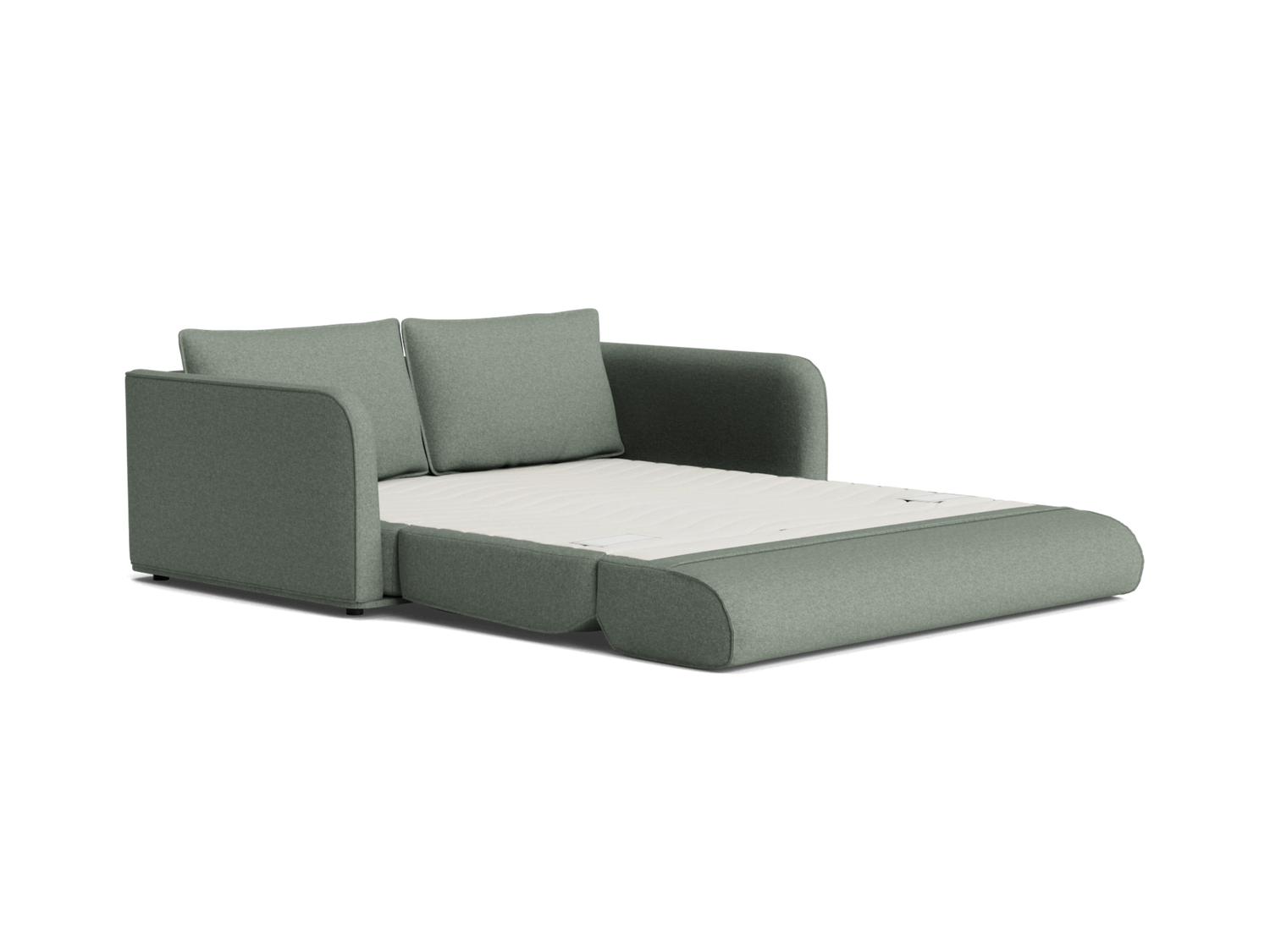
Couch Bed Buyer's Guide: How to Choose the Right One for Your Home
Share
A couch bed is one piece of furniture doing two full-time jobs. It is what you sit on at the end of the day, and it is where someone sleeps when they stay over. Get it right and it makes a small home feel bigger. Get it wrong and it works as neither a real couch nor a real bed.
The good news: the category has come a long way. Modern couch beds use real mattresses, mechanisms that convert in seconds, and upholstery that does not announce itself as a sofa bed from across the room. The trick is knowing what to look for before you commit, especially because product listings make every couch bed sound roughly the same.
This is the field guide: what a couch bed actually is, how the formats differ, and the specs that decide whether it works in your home.
What is a couch bed?
A couch bed is any sofa designed to convert into a sleep surface. In the US it is sold under several names: couch bed, sofa bed, sleeper sofa, pull out couch, convertible sofa, sleeper couch. They all describe the same category, with different conversion mechanisms underneath.
The defining trait is that the sofa form and the bed form share the same footprint. You are not adding furniture; you are switching modes on the furniture you already have.
Who actually needs one?
A couch bed earns its place in five common situations:
-
Studio apartments where the bed and the couch have to share floor space, or the couch is the bed.
-
Small one-bedrooms where the living room doubles as the guest room.
-
Home offices that need to occasionally function as a guest bedroom.
-
Multipurpose rooms (dens, basements, lofts) that host overnight visitors a few times a year.
-
Renters who move every year or two and want one piece of furniture that travels well and covers two functions.
If none of those apply, a regular sofa and a regular bed are probably the better answer. A couch bed is the right buy when you actually need the dual function.
The mechanism is the most important spec
How a couch bed converts decides almost everything else about how it performs: sleep comfort, sit comfort, conversion speed, footprint, longevity. Five main formats:
Flip-down (or fold-down)
The back folds flat on a hinge. The seat becomes the sleep surface. No frame to unfold, no support bar. Conversion takes seconds.
Daily-use friendly. Often has deeper seats (22+ inches) because the mechanism does not take up the seat depth. The Koala Sofa Bed [4th Gen] and Byron use this format.
Pull out (traditional)
A folded metal frame and thin mattress live inside the seat base. Remove the cushions, unfold the frame, fluff the mattress.
Common, sometimes elevated bed height. Most likely to have a support bar across the lower back. Newer pull outs use sprung platforms that soften the ridge significantly.
Pull-out platform (slide out daybed)
A bed platform slides forward from under the chaise or seat to form a full-height bed. Mattress is one piece, not folded, sitting on a stable platform.
Closest experience to a real bed. Needs more floor space to extend into. The Wanda Sofa Bed uses this design to land a queen sleep surface at standard bed height.
Click clack
The back ratchets through three positions: upright, reclined, flat. The seat and back become the sleep surface.
Compact, no extension required, three positions in one. The sleep surface tends to be flatter and firmer than other formats; best for occasional one-person sleeping.
Futon (bi-fold)
A single mattress on a frame, with the back folding down flush with the seat. Cheapest entry point.
Performance is entirely dependent on mattress quality. A modern hybrid futon mattress sleeps surprisingly well. A 4-inch cotton-batting pad does not.
The mattress is the part nobody talks about (until they sleep on it)
Manufacturers love talking about the upholstery, the design, the conversion mechanism. The mattress usually gets a single bullet point. That is backwards.
For any couch bed you are seriously considering, look up:
-
Mattress thickness. 4 to 5 inches is the floor for occasional guest use. 6 inches plus is what we'd recommend for daily sleeping.
-
Mattress construction. Foam-only is lighter and softer. Pocket coils give better support and edge stability. Hybrid (foam over coils) tends to be the most comfortable for both sitting and sleeping.
-
Integrated topper. A built-in comfort layer is the difference between "fine for one night" and "I would actually choose to sleep here." Koala's Kloudcell topper is integrated into the FlipBed range for this reason.
-
Foam certifications. CertiPUR-US certification means the foam has been tested for harmful chemicals. Worth checking if anyone with sensitivities will be sleeping on it.
Sizing: footprint vs sleep surface
A couch bed has two sets of dimensions: the sofa footprint (width and depth when folded) and the bed dimensions (width and depth when open). They are not always proportional.
For reference, Koala's three main sofa beds:
-
Koala Sofa Bed [4th Gen]: 46-inch sofa (Twin XL bed), 64-inch sofa (Full bed), or 70-inch sofa (Queen bed). Open depth is 88 inches across all sizes.
-
Byron Sofa Bed: 92-inch sofa, Queen bed, 70-inch open depth.
-
Wanda Sofa Bed: 99-inch sofa with chaise, Queen bed via slide-out platform.
When you are measuring your space, check both numbers: can the sofa fit against the wall, and is there enough clear floor space in front for the bed to extend?
Sofa-side comfort: do not neglect the daily sit
Most couch beds get used as couches 95 percent of the time. If the seat is shallow, firm, or angled wrong, you will notice every day. The sleep mode you might use 10 nights a year.
Things to look for on the sofa side:
-
Seat depth: 22 inches is the floor for comfortable lounging. 23 to 24 inches starts to feel like a real sofa. Anything under 20 inches will feel like a daybed.
-
Backrest angle: A slight rear tilt (5 to 10 degrees) supports relaxed sitting. A vertical backrest feels formal.
-
Foam density: High-density foam holds its shape over years. Low-density foam pancakes within months of daily use.
-
Edge support: Sit on the front edge of any sofa for 10 minutes. If you sink in, the foam is too soft.
See the full Koala couch bed range for designs built around the daily sit and the overnight sleep in equal measure.
Upholstery, covers, and the things that age your couch bed
A couch bed lives a harder life than most sofas because it gets used as both a couch and a bed. Spills, pets, kids, sheets, rubbing on the fabric every night. The upholstery decisions matter more here than they do for a regular sofa.
Defaults to look for:
-
Removable, machine-washable covers across every cushion (not just the seat). This is the single most important feature for longevity.
-
Water-resistant, stain-resistant fabric. Common across Koala's range; ideally PFAS-free.
-
Quality of stitching at the seams. If a listing shows seam detail, that is usually a good sign the brand is proud of the construction.
How to actually compare two couch beds
Run this short checklist when comparing two options:
-
Conversion mechanism. Watch the conversion video. How many steps, how long, what is the bed-side experience?
-
Mattress specs. Thickness, construction (foam, coil, hybrid), and whether there is an integrated topper.
-
Sofa-side seat depth. Aim for 22 inches or more for genuine lounge comfort.
-
Open depth. Make sure you have the floor space.
-
Cover and care. Are covers removable and washable?
-
Warranty. Aim for 5+ years for a quality couch bed.
-
Trial period. 100 to 120 days is the current benchmark. Koala offers 120 days across the sofa bed range.
Three Koala couch beds worth a closer look
Koala Sofa Bed [4th Gen]
The standard pick. FlipBed conversion (no frame, no bar), 23.5-inch seat depth, integrated Kloudcell topper, three sizes (Twin XL, Full, Queen), machine-washable covers. The most flexible couch bed in the range for apartments, studios, and primary living rooms.
Byron Sofa Bed
A 92-inch flip-down sleeper with 42-inch deep seats (genuine lounge-deep), Queen sleep surface, hidden base storage. Built for larger living rooms that host often and lounge deeper than the average sofa.
Wanda Sofa Bed
A 4-in-1 chaise-and-sofa with a slide-out queen platform at standard bed height. 99-inch sofa width, reversible chaise, daybed mode, Kloudcell topper. The most flexible piece in the Koala range. Built for homes where the couch bed needs to wear multiple hats.
Frequently asked questions
What is the difference between a couch bed and a sofa bed?
There is no real difference. Couch bed, sofa bed, sleeper sofa, sleeper couch, and pull out couch all refer to the same category: a sofa that converts into a sleep surface. The terms are used interchangeably in the US.
Are couch beds good for everyday use?
The right one is. Look for at least 6 to 8 inches of mattress, no support bar across the middle, an integrated topper, and a mechanism rated for high cycle counts. A budget couch bed used as a primary bed will not last. A quality flip-down or platform sleeper used nightly can serve as a primary bed for years.
How much should I spend on a couch bed?
For occasional guest use, $800 to $1,500 will get you a decent couch bed from a real manufacturer. For daily-use sleeping or larger homes with frequent guests, plan on $1,500 to $3,000 for a hybrid or pocket-coil mattress, kiln-dried frame, and a longer warranty.
Do couch beds last as long as regular sofas?
Yes, if the build quality is there. The mechanism is usually the weak point on lower-tier designs. Flip-down and platform sleepers without a folding metal frame tend to last as long as a regular sofa because there is less to break. Pull-out designs with folding frames tend to need mechanism repair after 5 to 7 years of regular use.
What size couch bed do I need?
For one adult occasional use, a Twin XL couch bed (around 46 inches wide) works in studios and home offices. For two adults occasional use, a Full or Queen sleep surface is the minimum. For daily use by one person, a Full is usually enough; for couples sharing the sleep surface daily, go Queen.
Bottom line
A good couch bed is a real sofa first, a real bed second, and a mechanism that connects the two without becoming the worst part of either. Modern flip-down and slide-out platform designs have largely solved the comfort problems of older pull outs, especially when paired with proper mattresses and integrated toppers.
Browse the Koala couch bed collection to compare designs built around comfort, conversion speed, and the daily sit. Free 120-day trial across the range.