Convertible Sofas: How to Pick the Right One for a Multifunctional Space
Share
Most furniture has one job. A convertible sofa has at least two, and often three or four. The room it lives in usually has the same problem: it has to be a living room and a guest room, an office and a den, a studio and a bedroom, a TV space and a reading nook. The convertible sofa is the piece that makes the math work.
Picking the right one is a different exercise from picking a regular sofa. The dimensions matter more, the mechanism matters more, and the way it transitions between modes matters more than how it looks in isolation. This guide walks through how to choose a convertible sofa based on the room it has to serve, not just the spec sheet.
What counts as a "convertible sofa"
In the broadest sense, a convertible sofa is any sofa designed to switch between two or more functions. Most often, that means sofa-to-bed, but the category also covers sofas that reconfigure into chaise lounges, modular pieces that rearrange, or sectional sleepers with reversible orientations.
In retail listings, "convertible sofa" usually implies the sofa-to-bed function. That is the meaning this guide uses. The rest of the convertibility (chaise modes, modular rearrangement, daybed configurations) is icing.
Match the convertible sofa to the room
The room shapes the buying decision more than any other factor. Here are the five most common multifunctional rooms and what to prioritize in each.
Studio apartments
The bed is also the sofa. The convertible sofa is the primary piece of furniture in the home, used as a couch by day and a bed by night.
Priorities: daily-sleep-rated mattress (6+ inches), no support bar, removable washable covers (this gets used as a bed sheets-on, sheets-off every day), fast conversion mechanism (you will use it twice a day), under 80 inches of sofa width to fit a studio footprint.
What to skip: chaise configurations and L-shapes; they reduce the bed surface to one side and make the conversion awkward in tight quarters.
Best Koala match: Koala Sofa Bed [4th Gen] in Full or Queen, depending on whether you sleep solo or as a couple.
Home offices that double as guest rooms
The most common multifunctional room in remote-work households. Desk and office furniture in daily use; a convertible sofa for guests stays a few times a year.
Priorities: a stylish sofa that fits the office aesthetic (you look at it every day on video calls), comfortable enough for occasional 30 to 60-minute breaks, easy conversion when a guest shows up, hidden storage if the office has limited closet space (bedding has to go somewhere).
What to skip: oversized sectional convertibles; they eat the floor space you need for a desk and chair.
Best Koala match: Byron Sofa Bed (92-inch, Queen sleep surface, hidden storage).
Lofts and open-plan apartments
The convertible sofa often acts as a room divider, separating "living" from "sleeping" or "office" zones without walls.
Priorities: finished back (so the back of the sofa is presentable from the other zone), reversible chaise if the layout might change, finished base (no exposed mechanism visible from below if the loft has a level change).
What to skip: traditional pull-out designs where the metal frame is visible from one angle when the bed is open.
Best Koala match: Wanda Sofa Bed for its reversible chaise and finished design throughout.
Basements and den conversions
Multi-use family spaces: TV and gaming by day, guest sleeping during holidays, kids hangout during the week.
Priorities: durability (the basement bed couch lives a hard life), washable covers (kids and snacks), Queen sleep surface for adult guests, decent sit comfort for hours of TV use.
What to skip: delicate fabrics, light colors, and any convertible that requires precision to convert correctly.
Best Koala match: Koala Sofa Bed [4th Gen] in Queen, machine-washable covers across the cushion range.
Living rooms that occasionally host
The most common case. The living room is a living room 95 percent of the time. The convertible sofa needs to be a great sofa first and an occasional guest bed second.
Priorities: sofa-side comfort (deep seats, angled backrest, daily-use cushion density), style (matches the living room), reasonable bed quality for occasional guest stays.
What to skip: dedicated daily-sleep features that compromise the sofa side (very firm cushions, low-profile backs designed to fold flat at the cost of seating comfort).
Best Koala match: any of the three, but the Koala Sofa Bed [4th Gen] is the most flexible if you do not have a specific configuration need.
The four mechanisms worth considering for multifunctional rooms
Convertible sofas use several mechanisms; for rooms that wear multiple hats, four stand out.
Flip-down
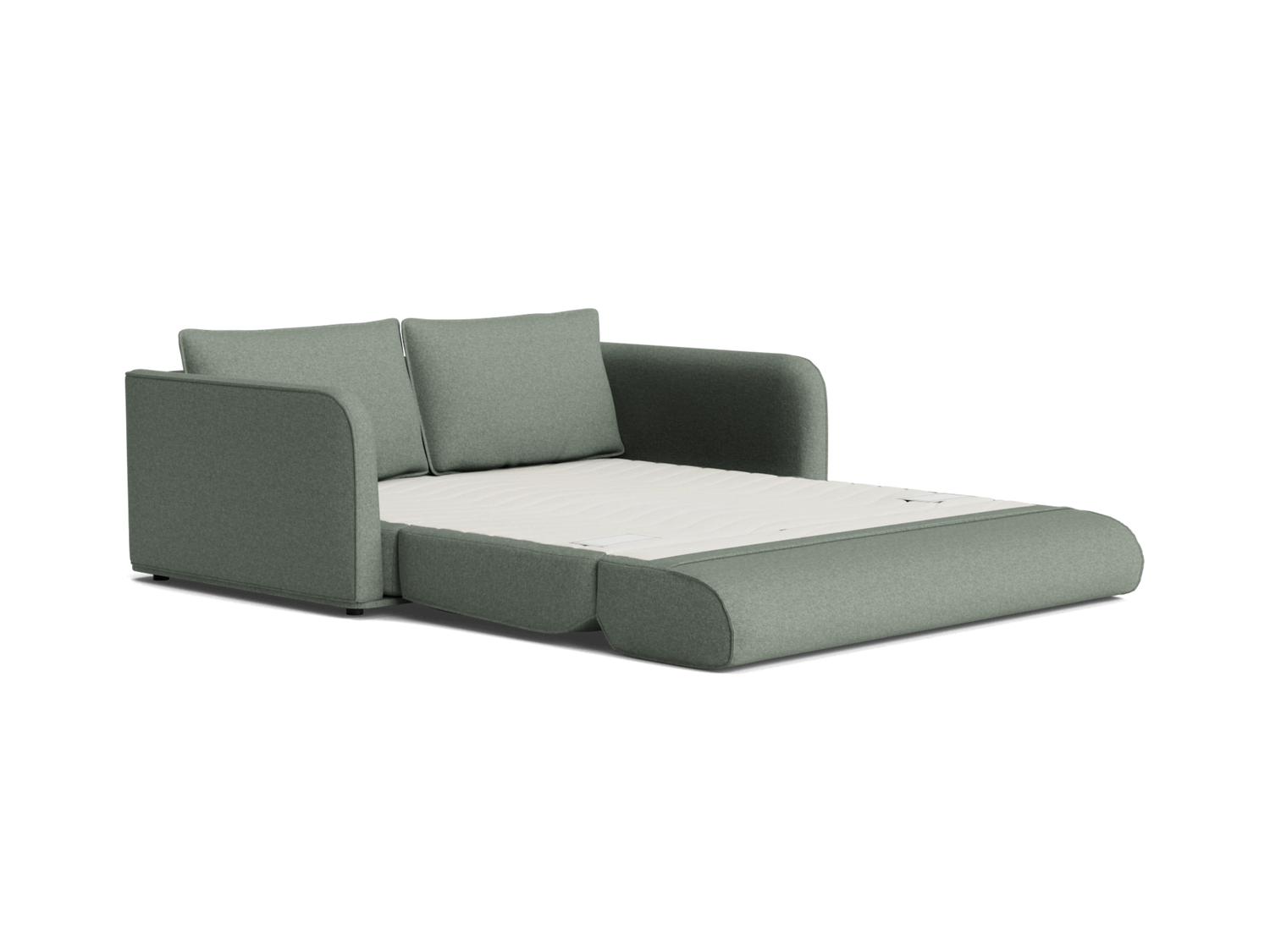
Back folds flat on a hinge. Seat becomes the sleep surface. No frame to unfold.
Why it works for multifunctional rooms: fastest conversion of any mechanism, no cushion removal, no exposed metal. Plays equally well as a daily sofa and an occasional bed. The Koala Sofa Bed [4th Gen] and Byron use this design.
Slide-out platform
A platform extends forward to form a full-height bed with a real mattress.
Why it works for multifunctional rooms: closest experience to a real bed for guests, doubles as a chaise or daybed in non-sleep configurations, lets the same piece of furniture serve three or four functions. The Wanda Sofa Bed uses this approach.
Modular convertible
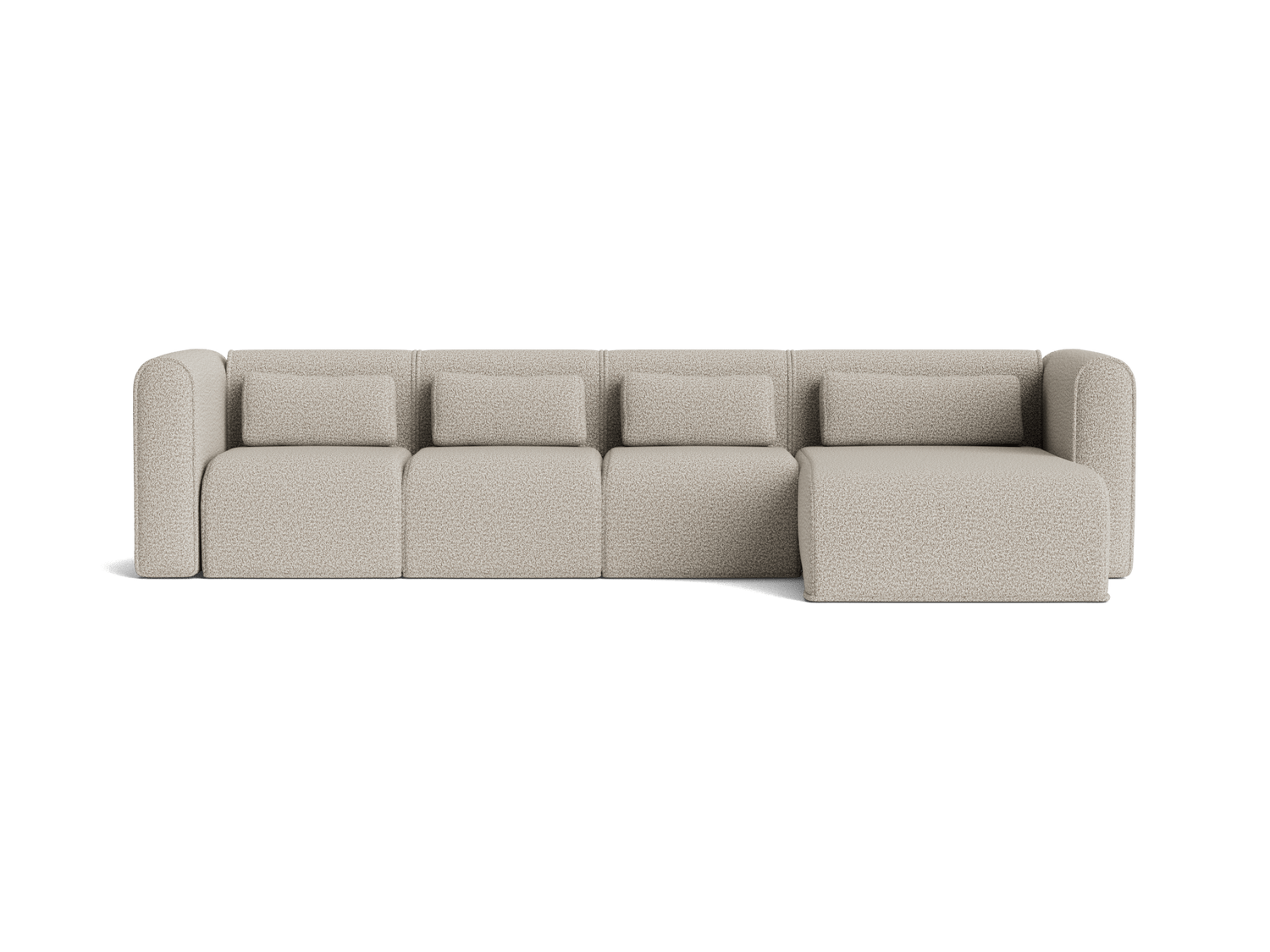
A modular sofa where individual pieces can be reconfigured into different layouts, including a bed configuration.
Why it works for multifunctional rooms: maximum flexibility, can adapt to changing room layouts or apartment moves. The trade-off is usually a more complex sleep mode and a higher price.
Click-clack
Back ratchets through three positions (sit, lounge, sleep). Compact format with no extension.
Why it works for multifunctional rooms: the smallest footprint of any convertible, three real positions, no floor extension required. The trade-off is that the sleep surface is flatter and firmer than other formats.
Sizing for multifunctional spaces
In a room that wears more than one hat, every inch matters. Some practical sizing notes:
-
Sofa width: In studios, stay under 80 inches if floor space is tight. In larger multifunctional rooms, 90 to 100 inches gives you a Queen sleep surface and a chaise mode.
-
Open depth: The most-forgotten dimension. A 70-inch sofa might open to 85 inches; you need that much floor space clear in front of the sofa.
-
Sleep surface: For solo use, Full is enough. For couples or frequent guest hosting, Queen is the floor.
-
Seat depth: In rooms where the sofa is the primary seating, do not compromise below 22 inches. In rooms where the sofa is occasional seating (offices, dens), you can drop to 20 inches if needed for footprint.
See the Koala sofa bed collection for full open-bed dimensions on each design.
Storage: the silent multifunctional feature
Multifunctional rooms run out of storage fast. A convertible sofa with hidden storage in the base or platform can hold guest bedding, throw blankets, seasonal pillows, or just clear the floor of a few storage boxes.
The Byron Sofa Bed has hidden storage, sized for full sets of guest sheets and pillows. The Wanda Sofa Bed has secret storage in the chaise base for the same purpose. If you are choosing between two convertibles with similar specs, the one with storage usually wins for multifunctional use.
Three Koala convertible sofas across multifunctional use cases
Koala Sofa Bed [4th Gen]
The most flexible single-piece convertible. Flip-down mechanism, integrated Kloudcell topper, three sizes (Twin XL, Full, Queen). Best for studios, home offices, basements, and any room where a flexible convertible sofa is the primary piece of furniture. Eight colorways span minimalist (Morning Fog, Silver Sand) through warm contemporary (Cinnamon Sky, Olive Butter).
View the Koala Sofa Bed [4th Gen]
Byron Sofa Bed
92-inch flip-down with 42-inch deep lounge seats and Queen sleep surface. Hidden base storage. Best for home offices that need to host guests, larger living rooms, and dens. Boucle Luxe fabrics for a softer, fabric-led aesthetic.
Wanda Sofa Bed
99-inch chaise-and-sofa with slide-out queen platform at standard bed height. Reversible chaise, daybed mode, hidden storage in the chaise base. The most multifunctional piece in the Koala range: works as a sofa, chaise, daybed, or queen bed. Best for lofts, open-plan apartments, and large multifunctional living rooms.
How to evaluate a convertible sofa for a specific room
A short checklist for matching a convertible to a multifunctional space:
-
Measure the wall it will live against, plus open depth in front (typically 80 to 90 inches when extended). Both have to fit.
-
Identify the primary use mode. Daily sofa with occasional bed? Daily bed with occasional sofa? Equal split? Your answer changes which features matter.
-
Count the conversions per month. Less than 4: mechanism speed is less important. 4 to 15: medium priority. 15+ (daily use): mechanism speed is the single most important feature.
-
Decide on the chaise/modular question. If the room layout might change, prefer modular or reversible chaise designs.
-
Match the aesthetic. In multifunctional rooms, the sofa is visible from multiple angles. Pick a design with a finished back if it will not be against a wall.
-
Check storage. For rooms short on closet space, a convertible with built-in storage saves real square footage.
-
Confirm cover removability. Multifunctional rooms see more spills and traffic than single-use rooms. Machine-washable covers become essential.
Frequently asked questions
What is the difference between a convertible sofa and a sofa bed?
In US retail, the terms are used interchangeably. Both describe a sofa that converts into a sleep surface. "Convertible sofa" tends to emphasize the multi-function aspect; "sofa bed" tends to emphasize the sleep capability. Same category, different marketing.
Are convertible sofas good for daily sleeping?
The right ones are. For daily use in a studio or small apartment, look for 8-inch mattresses, no support bar, daily-rated mechanisms, and removable washable covers. Budget convertibles will not hold up to daily sleeping; quality flip-down or platform designs will.
What is the most versatile convertible sofa format?
Slide-out platform designs tend to be the most versatile because they can serve as a sofa, chaise, daybed, and queen bed, depending on configuration. Modular convertibles offer even more layout flexibility, but at higher cost and complexity. Flip-down designs are the most efficient single-mode convertibles.
How much should I spend on a convertible sofa for a multifunctional room?
For a room where the convertible gets daily use (studio, primary living room), plan on $1,500 to $3,000 to get the features that hold up. For occasional-use multifunctional rooms (home office with rare guests, basement), $1,000 to $1,800 is enough for a quality model.
Do convertible sofas work in small apartments?
Convertible sofas were essentially invented for small apartments. The category exists because some rooms have to do multiple jobs. For studios and one-bedrooms in tight markets (NYC, SF, Chicago, LA), a convertible sofa is often the most important piece of furniture in the home.
Bottom line
A convertible sofa is room-specific furniture. The same model can be exactly right in one home and exactly wrong in another, based entirely on what the room has to do. Decide on the room's primary use first, then the secondary use, then choose the mechanism and footprint that handles both without compromising either.
Browse the Koala convertible sofa range to find a model built around the specific multifunctional use case in your home. 120-day free trial across the range, so you can confirm the room match before you commit.